How to Choose Acid Zinc Plating for Global Sourcing?

Time:2026-10-07 Author:Amelia
0%

Choosing Acid Zinc Plating for global sourcing is not simply a price comparison. It is a performance decision made across different climates, standards, and supplier capabilities. A coating that survives a dry warehouse may fail beside a humid coastline. That detail matters.

Plating engineer Dr. Leslie H. Baugh offers a practical principle: “The best finish is the one that performs in its real service environment.” Buyers should test that environment before selecting a supplier. Consider corrosion exposure, base-metal strength, coating thickness, chromate type, and required salt-spray performance. Confirm whether the process uses trivalent passivation and supports applicable environmental requirements, such as RoHS or REACH obligations. Requirements differ by market.

Ask for process records, not attractive samples alone. Review bath control logs, thickness measurements, adhesion results, and independent laboratory reports. A supplier should explain how it manages hydrogen embrittlement risks for high-strength steel. It should also identify packaging methods for long-distance transport. Sealed bags, desiccants, and separators can prevent white corrosion before delivery.

Cost still matters. It should not lead the decision.

A lower quotation may hide rework, inconsistent color, weak documentation, or delayed customs release. Global sourcing also requires clear drawings, agreed inspection methods, approved samples, and traceable corrective actions. This is where many purchasing teams underestimate the work. I would not treat any single salt-spray number as final proof. Real service conditions can be harsher, stranger, and less predictable. The strongest Acid Zinc Plating strategy balances technical evidence, supplier experience, regional compliance, and honest review of what remains uncertain.
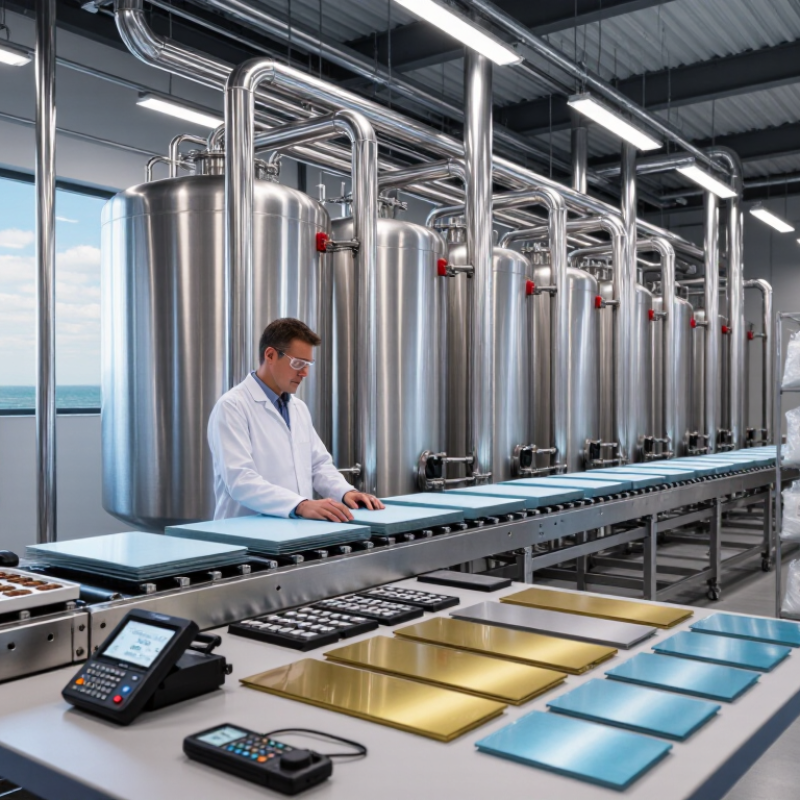
How to Choose Acid Zinc Plating for Global Sourcing?

Understanding Acid Zinc Plating and Its Main Applications

Acid zinc plating uses an acidic electrolyte to deposit a protective zinc layer on steel. Chloride-based baths are common because they provide fast deposition and strong covering power. The surface can appear bright, smooth, or slightly bluish, depending on additives and post-treatment. It is fast. That matters for high-volume production.

This finish suits bolts, stamped brackets, appliance parts, electrical cabinets, and light automotive hardware. Zinc protects steel by acting as a sacrificial layer, even when minor scratches expose the substrate. However, salt-spray hours should not be treated as a direct prediction of field life. Testing conditions may differ from outdoor moisture, fingerprints, or trapped water. A shiny finish can mislead.

For global sourcing, confirm the base steel, coating thickness, chromate type, color, and required corrosion test. High-strength fasteners need special attention because cleaning and plating may introduce hydrogen. A controlled baking process can reduce this risk, but it must match the material and specification. Ask suppliers for bath-control records, thickness readings from several areas, and test reports linked to the actual production lot. Do not rely only on sample appearance. I have seen attractive samples fail at edges and recesses. That weakness is easy to miss. Supplier capability, inspection discipline, packaging, and regional compliance also affect the final result. A lower unit price may hide rework, delays, or inconsistent protection.

Defining Performance, Finish, and Environmental Requirements

How to Choose Acid Zinc Plating for Global Sourcing?

Defining performance, finish, and environmental requirements starts with the part’s real working conditions. Acid zinc plating can provide a bright, even appearance and reliable coverage on many steel components. However, appearance alone proves little. The NACE IMPACT study estimated global corrosion costs at US$2.5 trillion annually, equal to about 3.4% of global GDP. This makes coating performance a commercial issue, not merely a cosmetic choice.

Specify coating thickness, passivation, sealant, hardness, and required corrosion resistance before requesting quotations. ASTM B633 and ISO 4042 provide useful frameworks for zinc-coated steel and fasteners. Salt-spray hours still need careful interpretation. ASTM B117 defines a test method, not guaranteed service life. A part surviving 240 hours in a cabinet may fail quickly near road salt, humidity, or trapped moisture. That difference is easy to overlook.

Environmental requirements need equal attention. EU RoHS restricts hexavalent chromium to 0.1% in homogeneous materials, while REACH obligations may vary by substance and destination. Ask suppliers for current declarations, process chemistry details, wastewater controls, and laboratory reports. Trivalent passivation is often preferred, but “trivalent” should not be accepted without documentation. During sourcing audits, inspect racks, rinsing stages, and thickness records, not only finished samples. A bright finish can hide weak adhesion. Our specifications may also be incomplete; reviewing field failures after launch remains necessary.

Comparing Zinc Plating Processes, Materials, and Technical Options

Choosing acid zinc plating for global sourcing requires more than comparing quoted prices. The process must match the base material, part geometry, production volume, and service environment. Acid zinc solutions often provide bright finishes, fast deposition, and good coverage on many steel components. They may also perform well on parts requiring an attractive appearance.

Material selection changes the result. Low-carbon steel usually plates predictably, while high-strength steel may require careful hydrogen-management controls. Cast surfaces, sharp edges, and deep recesses can create uneven thickness. Ask suppliers for coating-thickness data, adhesion results, and corrosion-test records from similar parts. Real samples reveal more than a polished specification sheet.

Technical options include clear, blue, or colored passivation, followed by a sealer when extra corrosion resistance is needed. A trivalent passivation system is commonly considered for modern compliance requirements, but performance depends on bath control and post-treatment handling. Salt spray testing can support comparisons, although it does not perfectly represent field exposure. Check current standards with qualified laboratories.

Small details matter. Racking marks should be placed on nonfunctional surfaces. Threaded holes may need masking or post-plating inspection. Parts should also be cleaned thoroughly before plating; poor preparation can cause blistering or early failure. Acid zinc is not always the best answer. In one sourcing project, a lower-cost option looked attractive until edge corrosion appeared during testing. The specification needed revision. That lesson remains useful: compare process capability, not just finish and price.

How to Choose Acid Zinc Plating for Global Sourcing? - Comparing Zinc Plating Processes, Materials, and Technical Options

Plating Process or Option Typical Zinc Chemistry Suitable Base Materials Typical Operating Range Typical Coating Thickness Appearance Corrosion Protection Dimensional Impact Advantages for Global Sourcing Limitations and Technical Risks Recommended Applications
Acid Chloride Zinc Plating Water-soluble zinc chloride, potassium chloride or ammonium chloride, boric acid, and organic brighteners Low-carbon steel, medium-carbon steel, spring steel, and many iron-based parts Approximately 20–45 °C; acidic electrolyte, commonly pH 4.5–5.5; current density depends on the bath and part geometry Commonly 5–25 μm; higher thicknesses may be specified when geometry and tolerances permit Bright, smooth, and highly reflective when properly controlled Good sacrificial protection; final performance depends strongly on passivation and topcoat Uniform thickness is generally good on flat and moderately recessed areas; thread and edge buildup must be controlled Fast deposition, strong brightness, good productivity, and broad availability from qualified plating suppliers Poor pretreatment can cause blistering or peeling; brightener balance and chloride concentration require close control; hydrogen embrittlement must be considered for high-strength steel Fasteners, stamped parts, brackets, automotive hardware, appliances, and general industrial components
Acid Sulfate Zinc Plating Zinc sulfate, supporting electrolyte, buffers, and proprietary or non-proprietary additives Steel and iron components; suitability depends on cleaning, activation, and bath formulation Typically 20–40 °C; acidic electrolyte; operating parameters vary more widely than chloride systems Commonly 5–25 μm Bright to semi-bright; appearance depends on additive package and surface preparation Good sacrificial protection when combined with suitable conversion coating Usually acceptable for open surfaces; recessed-area coverage may be less predictable than with optimized chloride systems Lower chloride exposure in the process area and potentially simpler wastewater segregation in some facilities Fewer suppliers may offer mature high-volume sulfate lines; process stability and cosmetic consistency must be verified during qualification General steel components, selected continuous or rack-plated parts, and applications where sulfate chemistry is preferred
Alkaline Non-Cyanide Zinc Plating Alkaline zincate solution with caustic alkali, zinc, and organic additives; cyanide-free formulation Steel, iron, cast iron, and some zinc die-cast components with suitable pretreatment Often approximately 20–35 °C; strongly alkaline bath; current distribution is formulation-dependent Commonly 5–25 μm Usually bright or semi-bright, with a smooth and consistent finish when controlled Good corrosion protection; conversion coating selection remains critical Often provides better thickness distribution on complex shapes, recesses, and edges than acid zinc Useful for geometrically complex parts and suppliers operating wastewater systems designed for alkaline zinc processes Lower deposition speed than many acid chloride systems; higher electrical energy demand and more demanding bath maintenance may occur Complex brackets, automotive components, recessed parts, and components requiring improved coverage uniformity
Barrel Acid Zinc Plating Usually acid chloride zinc chemistry operated in a rotating barrel with suitable contact and loading controls Small steel fasteners, washers, clips, pins, and other durable bulk parts Approximately 20–45 °C; process conditions depend on barrel loading, rotation, and contact efficiency Commonly 5–15 μm for general-purpose hardware; project specifications may require more Bright or blue-white after passivation; part-to-part contact can create small visual variations Good for bulk hardware when coverage, passivation, and drying are properly controlled Low racking cost and high throughput; contact marks and edge wear may occur Cost-effective for high-volume small parts and well suited to consolidated international production Not suitable for fragile, long, deep, or easily tangled parts; drainage, nesting, and barrel loading can affect coverage Bolts, nuts, screws, washers, clips, small stampings, and standard hardware
Rack Acid Zinc Plating Usually acid chloride zinc chemistry applied to individually fixtured parts Large, delicate, flat, elongated, or cosmetic steel parts that cannot be barrel processed Approximately 20–45 °C; rack position and anode arrangement are important process variables Commonly 8–25 μm, subject to drawing requirements and dimensional limits More consistent cosmetic finish than barrel plating when racking and current distribution are properly designed Good sacrificial protection with suitable passivation and sealing Better control of orientation, contact points, and local thickness on individual parts Supports larger or appearance-critical components and makes inspection and traceability easier Higher handling and labor cost; rack marks, contact loss, and uneven current distribution can affect yield Visible brackets, panels, formed parts, large fasteners, and delicate components
Zinc Plating with Clear or Blue Trivalent Passivation Zinc deposit followed by a trivalent chromium conversion coating; chromium(VI)-free process Steel and iron components with zinc plating Applied after zinc deposition; process temperature and immersion time depend on the conversion system Usually used over 5–20 μm of zinc; conversion coating adds very little dimensional thickness compared with the zinc layer Clear, silver-white, or light blue appearance Commonly provides better white-rust resistance than unpassivated zinc; exact hours vary by specification and sealant Minimal dimensional effect; suitable where the visual appearance must remain light and metallic Widely accepted for products requiring chromium(VI)-free compliance and a clean silver appearance Thin conversion films can be damaged by handling; color and salt-spray results depend on bath age, drying, and sealing General fasteners, appliances, electrical hardware, automotive parts, and export products requiring chromium(VI)-free processing
Thick-Film or Black Trivalent Passivation with Sealer Zinc plating followed by a trivalent conversion coating, often with a black dye or pigment system, plus an organic or inorganic sealer Steel and iron components with zinc plating Post-treatment sequence; sealer curing or drying conditions must be controlled according to the selected system Usually 8–20 μm of zinc, with a thin additional conversion or sealer film Black, dark gray, or deep charcoal; color uniformity depends on substrate, zinc texture, and sealing Enhanced corrosion resistance is possible when the conversion coating and sealer are correctly matched Usually low dimensional impact, but excessive sealer buildup may affect close-fit interfaces Provides a decorative or low-reflectivity finish while supporting chromium(VI)-free requirements Color variation, rub-through, fingerprints, and incomplete coverage can occur; appearance criteria should be agreed with approved samples Automotive visible hardware, consumer products, dark-finish brackets, and components requiring reduced reflectivity
Zinc-Iron Alloy Plating Acidic or alkaline zinc-iron electrolyte producing a zinc-rich alloy deposit, commonly with a controlled low iron content Steel and iron components Often approximately 20–40 °C; exact temperature, pH, metal ratio, and current density depend on the process design Commonly 5–20 μm Bright, gray, or dark finish depending on post-treatment Often higher corrosion resistance than conventional zinc at similar thickness when paired with an appropriate passivation and sealer Similar general dimensional effect to zinc plating, but deposit properties must be validated for threads and fits Can reduce coating thickness requirements in selected applications while maintaining corrosion performance Higher process complexity; alloy composition, bath balance, and post-treatment must be tightly controlled for repeatability Automotive components, high-corrosion environments, and parts requiring improved performance-to-thickness ratio
Zinc-Nickel Alloy Plating Acidic or alkaline zinc-nickel electrolyte, typically designed for a zinc-rich alloy deposit containing approximately 10–16% nickel by mass Steel, high-strength steel, and selected iron-based components Often approximately 20–40 °C; exact bath chemistry, alloy percentage, and current density are process-specific Commonly 5–15 μm; higher thickness may be used where permitted Silver-gray, black, or other controlled appearance after passivation and sealing Very high corrosion performance relative to conventional zinc, especially with an appropriate sealer and topcoat Lower coating thickness can help preserve dimensions, but alloy deposition uniformity must be verified on complex parts Suitable for demanding automotive, transportation, and industrial applications where lifecycle protection justifies higher cost Higher chemical and quality-control cost; alloy composition, hydrogen embrittlement relief, and topcoat compatibility require formal validation High-strength fasteners, underbody components, safety-related hardware, and severe-corrosion applications
Zinc Flake Coating Non-electrolytic zinc and aluminum flake coating applied by dip-spin or spray, normally with an inorganic or organic binder High-strength steel, spring steel, and parts sensitive to hydrogen embrittlement Applied by coating and curing rather than electroplating; curing temperatures commonly range from approximately 180–300 °C depending on the system Commonly 6–15 μm in multi-layer systems Silver-gray, black, or colored depending on the topcoat High corrosion resistance with no electroplating-induced hydrogen generation during coating deposition Controlled thickness is possible, but coating on threads, holes, and mating surfaces must be specified carefully Useful alternative when high-strength steel, hydrogen risk, or high corrosion requirements make conventional zinc less suitable Requires curing capability and careful control of masking, coating weight, friction coefficient, and electrical conductivity High-strength fasteners, chassis parts, brake components, and parts requiring controlled torque-tension behavior
Technical Notes: Values shown are typical industry ranges rather than universal specifications. Final requirements should be confirmed against the applicable drawing, purchase specification, and test method. Neutral salt spray results depend on zinc thickness, surface preparation, conversion coating, sealer, part geometry, and test conditions. For high-strength steel, hydrogen embrittlement risk assessment and an approved post-plating baking procedure may be required. Common reference frameworks include ASTM B633, ISO 2081, ISO 19598, ASTM B117, and ISO 9227; the applicable standard and acceptance criteria should be agreed before production.

Evaluating Global Suppliers, Certifications, Capacity, and Quality Control

How to Choose Acid Zinc Plating for Global Sourcing?

Selecting an acid zinc plating supplier requires more than comparing unit prices. Evaluate certification records, process controls, and experience with your part geometry. A reliable supplier should explain bath chemistry, coating thickness, adhesion testing, and hydrogen embrittlement controls clearly. Ask for recent audit reports and sample inspection records. Certifications matter, but certificates alone can mislead. Verify their scope, expiry dates, and actual production site. I have found that clear documentation often reveals stronger discipline than impressive sales claims.

Capacity should match your forecast, not only your first order. Review monthly output, backup equipment, maintenance routines, and labor stability. Request a production trial using your drawings and critical dimensions. Inspect thread fit, coverage inside recesses, color consistency, and corrosion-test results. A supplier may pass laboratory testing yet struggle during peak seasons. That risk deserves attention. Quality control should include incoming material checks, bath analysis, thickness measurement, and final visual inspection. Independent testing can strengthen confidence for high-risk components.

Tips: Compare at least three qualified suppliers. Ask how they handle rejected batches and corrective actions. Confirm packaging, labeling, export documents, and delivery terms before approval. Keep sealed samples from every trial lot. They become useful references later. Do not ignore small defects. A minor white spot may signal unstable cleaning, poor rinsing, or rushed handling. Supplier selection is never perfect, and my own evaluations have sometimes missed capacity risks. Rechecking assumptions is part of responsible sourcing.

Assessing Total Cost, Logistics, Compliance, and Long-Term Support

How to Choose Acid Zinc Plating for Global Sourcing?

Choosing acid zinc plating requires more than comparing prices per part. Acid zinc can provide a bright finish and efficient production, but coverage inside deep recesses may be weaker than alkaline zinc. Confirm the required coating thickness, appearance, adhesion, and corrosion performance before requesting quotations. A practical review should include tooling, inspection, packaging, freight, duties, rework, and rejected parts. The cheapest quote is rarely the lowest total cost.

I have seen sourcing teams overlook logistics until finished goods reached the port. Ask about batch sizes, production capacity, export packaging, and realistic lead times. Zinc-plated parts need dry, protective packaging to reduce white corrosion during storage and ocean transport. Request sample parts and inspect them with suitable tools, such as coating-thickness measurements and agreed corrosion tests. Test methods matter. An unclear specification creates arguments later.

Compliance must be checked at the production site and in the destination market. Review chemical declarations, restricted-substance requirements, wastewater controls, worker-safety records, and traceability documents. Requirements can differ between countries, so written confirmation is safer than assumptions. Long-term support also deserves a line in the contract. Define process-change notifications, corrective-action timing, retained samples, and backup capacity. I once treated supplier support as an extra. That was a mistake. Strong suppliers explain failures openly, preserve consistent records, and help adjust the process when designs or regulations change.

FAQS

When is acid zinc plating suitable for a component?

It often suits steel parts needing bright appearance and fast deposition. Check geometry, material, volume, and service conditions. It is not always the best choice.

Which materials plate most predictably?

Low-carbon steel usually plates consistently. High-strength steel needs careful hydrogen-management controls. Cast surfaces may produce uneven coverage.

Can acid zinc cover deep recesses effectively?

Coverage inside deep recesses may be weaker than on exposed surfaces. Sharp edges can also receive uneven thickness. Measure real samples.

What technical options can improve corrosion resistance?

Clear, blue, or colored passivation can follow zinc plating. A sealer may add protection. Performance depends on bath control and handling.

How should coating quality be verified?

Request thickness data, adhesion results, and corrosion-test records. Inspect sample parts with suitable measuring tools. A polished specification sheet is not enough.

What details should suppliers address before production?

Specify racking marks on nonfunctional surfaces. Discuss masking for threaded holes and post-plating inspection. Poor cleaning can cause blistering.

How should total sourcing cost be calculated?

Include tooling, inspection, packaging, freight, duties, rework, and rejected parts. The lowest quoted price may create higher final costs. That mistake is easy.

What logistics requirements matter during transport?

Confirm batch sizes, production capacity, export packaging, and realistic lead times. Use dry, protective packaging to reduce white corrosion during storage and ocean transport.

Which compliance and support records should be requested?

Review chemical declarations, restricted-substance requirements, wastewater controls, safety records, and traceability documents. Define process-change notices, corrective-action timing, retained samples, and backup capacity. Written confirmation is safer.

Conclusion

Choosing Acid Zinc Plating for global sourcing requires more than comparing quoted prices. Buyers should first understand how the process works and where it is best applied, then define requirements for corrosion resistance, coating thickness, appearance, durability, and environmental performance. It is also important to compare available zinc plating processes, base materials, post-treatment options, and technical specifications to ensure the selected solution matches the product’s operating conditions.

Supplier evaluation should cover relevant certifications, production capacity, process consistency, inspection methods, and quality-control documentation. Buyers should also assess total cost, including tooling, testing, packaging, transportation, duties, and potential rework, rather than focusing only on the unit price. Clear communication about compliance, delivery schedules, traceability, and technical support can reduce sourcing risks. By balancing performance, finish, sustainability, cost, logistics, and long-term cooperation, companies can select an Acid Zinc Plating solution that delivers reliable quality across international supply chains.


Amelia

Amelia

Amelia is a seasoned marketing professional with a wealth of expertise in our company’s core offerings. With an unwavering passion for driving growth and innovation, she plays a pivotal role in shaping our marketing strategies and enhancing brand visibility. A key aspect of her responsibilities......