 HIYIE
HIYIE

Understanding Zinc-Nickel Alloy Technology & Global Industry Status
In modern industrial manufacturing, metal corrosion stands as one of the most persistent and costly threats to material integrity, infrastructure lifespan, and operational safety. As global standards evolve to demand longer service lifetimes and superior performance under extreme conditions, traditional barrier treatments like pure zinc or cadmium plating have reached their limits. Today, zinc-nickel (Zn-Ni) alloy electroplating has emerged as the premier sacrificial coating technology across demanding automotive, aerospace, marine, and defense sectors.
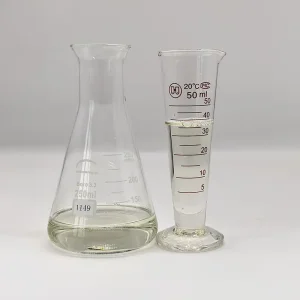
Typically composed of 12% to 15% nickel with the remainder being zinc, this specific alloy ratio provides a unique gamma-phase crystal structure. This configuration offers up to ten times the corrosion protection of traditional zinc coatings. Additionally, it provides exceptional heat resistance (up to 200°C without loss of protective performance) and reduced galvanic corrosion when coupled with aluminum. Our role as a premier zinc nickel alloy supplier is to provide the highly stabilized bath chemistries, trivalent passivates, and custom additives needed to achieve these engineering properties consistently across complex geometries.
Global Commercial Trends & Procurement Demands
The global electroplating industry is experiencing a massive paradigm shift. Environmental mandates—such as the EU's REACH regulations, RoHS directives, and global crackdowns on hexavalent chromium (CrVI) and cyanide-based chemical formulations—have forced suppliers to reconstruct their coating chemistries. In response, global procurement managers are prioritizing chemical formulations that are completely cyanide-free and leverage trivalent chromium passivation matrices.
Furthermore, the rapid expansion of the Electric Vehicle (EV) market has placed new demands on fastener and component suppliers. Battery enclosures, chassis mounts, and brake systems must withstand intense thermal variations, galvanic challenges from hybrid steel-aluminum assemblies, and exposure to aggressive road-deicing salts. Industrial buyers are no longer just looking for "suppliers." They are seeking technical partners who can provide certified chemical formulations capable of passing strict OEM standards, including Ford WSS-M21P17, General Motors GMW3179, and Volkswagen TL 244.
| Property Type | Acid Zinc-Nickel Systems | Alkaline Zinc-Nickel Systems |
|---|---|---|
| Alloy Distribution | Variable (differs in high/low current areas) | Extremely uniform (12-15% Ni consistently) |
| Plating Efficiency | High (typically 85-95%) | Moderate (typically 45-60%) |
| Hydrogen Embrittlement | Lower risk on high-strength steels | Requires post-bake, but uniform bath minimizes risk |
| Throwing Power | Moderate (ideal for simple components) | Excellent (ideal for complex geometry and internals) |
China Factory 4.0: Supply Chain Resilience & R&D Supremacy
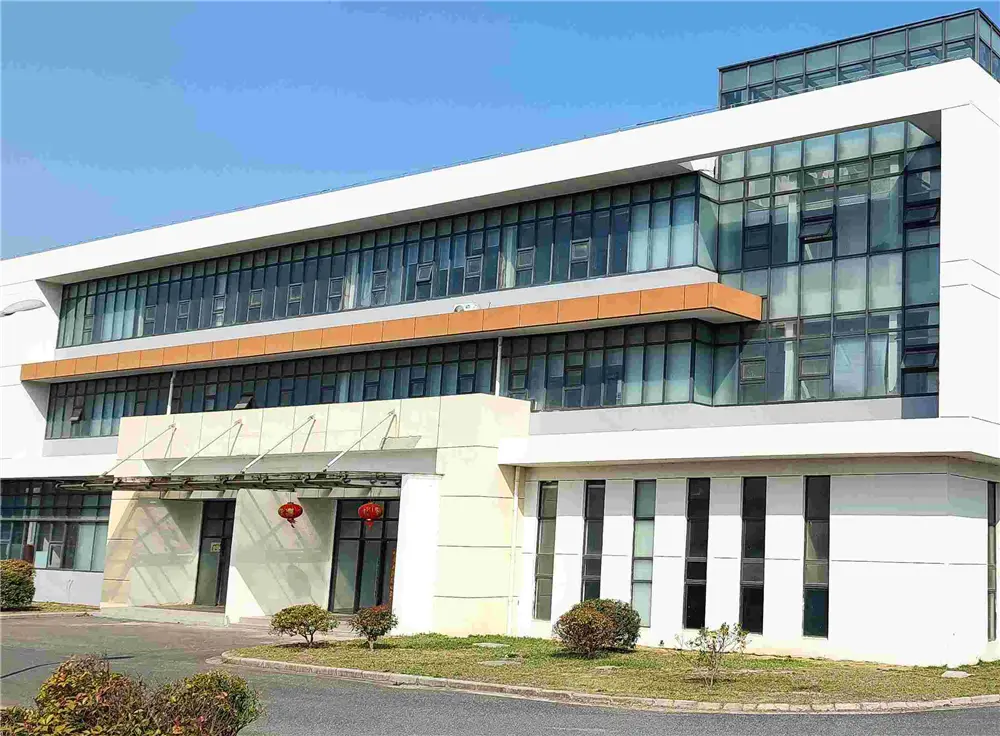
At Suzhou Hiyie Chemical Co., Ltd, we have embraced the principles of Industry 4.0 to secure supply chain resilience and deliver consistent chemical quality. Leveraging advanced, automated manufacturing loops and real-time monitoring of raw chemical purity, our production facilities minimize batch-to-batch variability. This guarantees that our global clients receive additives and chemical concentrates that perform reliably in their production plating lines.
To support localized requirements and rapid troubleshooting, we have established dedicated Research & Development hubs in Wuhan and Shanghai. These centers are equipped with state-of-the-art diagnostic instrumentation, including X-ray fluorescence (XRF) analyzers, atomic absorption spectrometers (AAS), and cyclic voltammetry stripping (CVS) units. This infrastructure allows us to assist our partners in maintaining stable bath chemistry balance, reducing chemical consumption, and optimizing waste-water treatment processes.
Localized Application Scenarios
The requirements for anti-corrosion finishes vary widely by region and industry. Here is how our specialized Zinc-Nickel formulations are deployed globally:
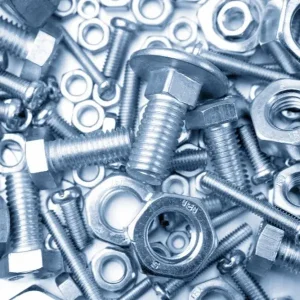
- Automotive Chassis & Underbody Parts (North America & Europe): Highly exposed fasteners, brackets, and fluid tubes rely on our alkaline zinc-nickel systems to withstand extreme road salt, gravel impact, and high under-hood temperatures.
- Marine and Offshore Fasteners (Asia-Pacific & North Sea): Offshore wind energy structures and coastal infrastructure require robust trivalent passivated Zn-Ni coatings to combat aggressive C5-M marine corrosive environments.
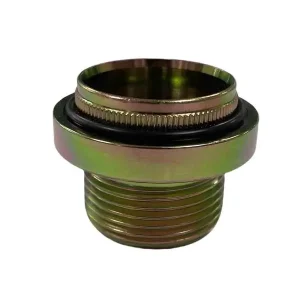
- Heavy Machinery & Hydraulics: Precision piston rods, valves, and hydraulic fittings utilize our formulations to achieve wear resistance and high-pressure tolerance without risking hydrogen embrittlement.