Top 10 Acid Zinc Electroplating Suppliers Worldwide?

Time:2026-10-02 Author:Henry
0%

Choosing the right Acid Zinc Electroplating supplier requires more than comparing prices or reading polished product pages. A reliable supplier should demonstrate process control, corrosion testing, technical support, and consistent batch performance. These details matter when zinc-coated fasteners face salt spray, vibration, moisture, and tight assembly tolerances.

Frank Altmayer, a recognized electroplating consultant and educator, often stresses the practical foundation of plating: “Good plating begins with good cleaning.” This principle remains highly relevant. Poor cleaning can leave stains, blisters, weak adhesion, or uneven zinc coverage, even when the plating line appears modern. A capable supplier should explain its cleaning stages, bath management, rack design, thickness testing, and post-treatment controls without hiding behind vague claims.

This Top 10 Acid Zinc Electroplating Suppliers Worldwide guide examines those areas closely. It considers production capacity, quality certifications, engineering experience, environmental responsibility, delivery reliability, and customer communication. Laboratory data will be useful, but factory discipline matters more during difficult orders. A supplier may show excellent test panels, yet struggle with complex geometries or changing specifications.

That difference deserves attention.

The ranking is not presented as an absolute verdict. Supplier capabilities can change, and regional service conditions may affect the final choice. Buyers should verify current certifications, sample results, lead times, and technical terms before placing orders. The strongest partner is not always the largest company. It is the supplier that delivers stable Acid Zinc Electroplating results, responds clearly, and accepts responsibility when performance falls short.
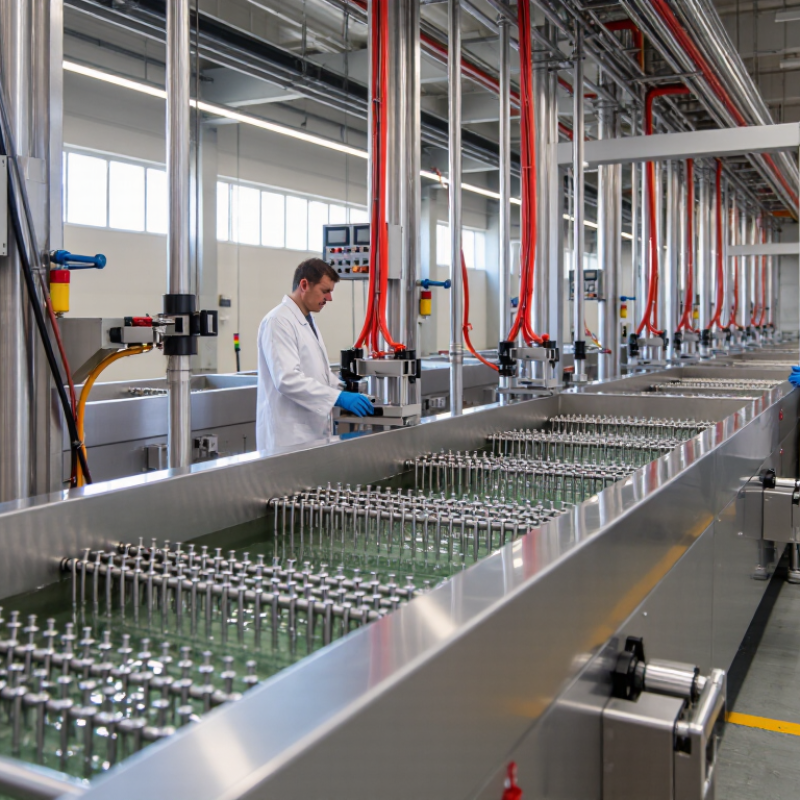
Top 10 Acid Zinc Electroplating Suppliers Worldwide?

What Is Acid Zinc Electroplating and Why Does It Matter?

Acid zinc electroplating deposits a thin zinc layer on steel through an acidic electrolyte. Chloride-based baths are common because they plate quickly and produce a bright, even finish. The zinc acts as a sacrificial barrier, protecting steel from corrosion when the coating remains intact.

This process matters because coating thickness, adhesion, and uniformity affect real service life. A thin layer may fail around threads, edges, or recessed holes. Poor cleaning can leave fingerprints, oil, or scale beneath the deposit. That weakness is easy to miss. Reliable suppliers should control bath chemistry, current density, temperature, and post-treatment conditions. They should also provide thickness readings, adhesion results, and corrosion-test data. Salt-spray hours help, but they do not perfectly predict outdoor performance. That limitation deserves attention.

Tips: Ask suppliers how they measure thickness on sharp edges and hidden surfaces. Confirm the base steel grade before production. Request sample parts, not only polished test panels. Check whether hydrogen-relief treatment is suitable for high-strength steel. Review inspection records from actual production lots. A supplier may promise consistency, yet process variation can still appear between shifts. Clear specifications and independent testing reduce that risk.

How to Evaluate Acid Zinc Plating Suppliers Worldwide

Selecting an acid zinc plating supplier requires more than comparing quoted prices. A low quote may hide weaker bath control, slower line speed, or poor wastewater management. The World Bank’s Commodity Markets Outlook reported zinc prices near US$2,650 per metric ton in 2023. That volatility can affect chemical surcharges and contract stability. Ask suppliers to separate metal, chemical, labor, energy, and logistics costs. Require recent certificates of analysis and lot traceability.

ISO 2081 defines zinc coating requirements for iron and steel products. ASTM B633 provides additional guidance on thickness, finish, and corrosion protection. A glossy sample proves little. Request thickness mapping from several points, adhesion results, color consistency, and salt-spray records under ASTM B117.

The International Lead and Zinc Study Group’s 2024 market reporting placed global refined zinc demand at roughly 14 million tonnes, showing the scale of the supply chain. However, demand volume does not prove plating competence.

During audits, inspect rectifier records, bath analysis frequency, rack design, and corrective-action history. Ask how the supplier manages hydrogen-embrittlement risks for high-strength steel. Review production capacity against your peak monthly volume, not its best sales presentation. Remote audits help, but they can miss cleaning defects and poor operator habits. I would still approve a pilot batch with independent testing. Suppliers sometimes provide perfect samples; production reality can be less consistent.

Top 10 Acid Zinc Electroplating Suppliers by Core Strengths

Top 10 Acid Zinc Electroplating Suppliers Worldwide?

The strongest acid zinc electroplating suppliers compete through distinct capabilities, not identical claims. One supplier may excel in automotive volumes, while another handles small precision components. High-output facilities often support automated rack and barrel lines, stable bath control, and continuous thickness testing. Others specialize in trivalent passivation, salt-spray performance, or complex geometries. These differences matter on the factory floor.

Industry reports from Grand View Research and Mordor Intelligence indicate steady growth in the global metal finishing market, supported by automotive, machinery, electronics, and construction demand. Their findings also highlight automation, corrosion resistance, and process efficiency as major purchasing factors. A practical top-ten comparison would therefore include suppliers known for high-volume production, tight dimensional control, rapid prototyping, laboratory testing, regional logistics, custom masking, wastewater management, energy reduction, and responsive engineering support. Strong suppliers should provide coating thickness records, adhesion results, bath maintenance data, and traceable inspection methods. Ask for evidence.

Acid zinc plating can look simple under bright lights. It is not. Hydrogen control, rack contact, current distribution, and post-treatment selection can change results quickly. Suppliers with ISO 9001 systems and independent laboratory partnerships usually offer better reliability, though certification alone proves little. A supplier’s real strength appears in repeatability across difficult parts, not in polished brochures. The ranking remains imperfect because public performance data is limited, and customer requirements vary by region, component design, and compliance expectations.

Comparing Supplier Capabilities, Quality, and Global Coverage

Top 10 Acid Zinc Electroplating Suppliers Worldwide

Comparing the top ten acid zinc electroplating suppliers requires more than checking production volume. Their real differences appear in bath control, coating consistency, testing capacity, and regional support. Experienced suppliers monitor pH, zinc concentration, temperature, and brightener levels during every production shift. These details influence appearance, thickness, adhesion, and corrosion resistance.

Quality evidence should include process records, thickness mapping, adhesion tests, and corrosion reports from recognized laboratories. Ask whether the supplier can manage small trial batches and high-volume orders without changing results. Strong suppliers usually provide documented traceability, trained technicians, and clear corrective-action reports. However, no supplier is perfect. Delivery delays, communication gaps, or inconsistent subcontracting can still affect a reliable-looking program. Global coverage also matters. A supplier with facilities or service teams across Asia, Europe, and North America may reduce freight risk and improve technical response.

Tips: Request recent sample data, not only certificates. Compare salt-spray results using identical test conditions. Check packaging, labeling, and moisture protection before approving shipment. A factory visit can reveal more than a polished presentation.

Some buyers focus too heavily on price. That can be a costly mistake. The lowest quotation may exclude testing, tooling adjustments, or emergency support. A fair comparison should measure total cost, defect rates, lead time, and communication quality. Supplier rankings should remain flexible, because capacity, technology, and export performance can change during the year.

How to Choose the Right Acid Zinc Plating Partner

Top 10 Acid Zinc Electroplating Suppliers Worldwide?

When comparing the top ten acid zinc electroplating suppliers worldwide, do not start with price. Start with process evidence. Ask for coating thickness records, bath analysis frequency, and recent salt-spray results. Acid zinc offers bright appearance, fast deposition, and good coverage on complex steel parts. However, results depend on pretreatment, current distribution, and post-treatment control. The International Zinc Association reports that zinc can corrode 10 to 100 times more slowly than steel, depending on exposure. That range matters. A reliable supplier should connect test results to your actual environment, not promise one universal service life.

Check whether each candidate follows ASTM B633 for zinc coatings on iron and steel, alongside ISO 9227 for salt-spray testing. Request sample panels from threaded holes, edges, and recessed areas. Inspect them after handling, not only before shipment. The ISO Survey 2022 recorded more than 1.2 million ISO 9001 certificates worldwide. Certification helps, but it does not prove plating expertise. Review corrective-action records, gauge calibration, wastewater controls, and lot traceability. Ask for capacity data during peak demand. A smaller supplier may communicate better, yet backup equipment could be limited. I would score process consistency above polished sales presentations. Some decisions still require a plant visit and independent testing.

Top 10 Acid Zinc Electroplating Suppliers Worldwide? - How to Choose the Right Acid Zinc Plating Partner

Anonymous supplier profiles are used to avoid brand or company promotion. The comparison focuses on internationally recognized plating standards, measurable process controls, quality evidence, and practical supplier-selection criteria. All capability ranges should be confirmed against the supplier’s current quotation, technical datasheet, and audit records.

Rank Anonymous Supplier Profile Recommended Application Fit Acid Zinc Process Typical Thickness Range to Confirm Substrate Compatibility Applicable Standards Quality Evidence Required Testing Capability Key Selection Advantage Critical Verification Question
1 Supplier Profile 01 Automotive fasteners and safety-related hardware Acid chloride zinc with controlled brightener dosing 8–25 μm, subject to drawing and corrosion requirement Carbon steel, low-alloy steel, hardened steel ISO 2081, ASTM B633, ISO 9227 Coating-thickness records, bath analysis, lot traceability XRF thickness testing, adhesion testing, neutral salt spray Strong process discipline for repeat production Can every lot be traced to bath chemistry and inspection results?
2 Supplier Profile 02 General industrial components and machined parts Acid chloride zinc with blue, clear, or black passivation options 5–20 μm, depending on corrosion and dimensional limits Steel and iron-based components ISO 2081, ASTM B633, customer drawings First-article inspection, process control plan, certificate of conformity XRF, visual inspection, dimensional inspection, salt spray through qualified laboratory Flexible finish and batch-size options How are recesses, threads, and tight tolerances protected from excess buildup?
3 Supplier Profile 03 Small precision parts and low-volume engineered products Acid zinc rack plating with selective masking capability 5–15 μm for dimensional applications Carbon steel, stainless steel with suitable activation ISO 2081, ASTM B633, ISO 9001 quality systems Dimensional layout, masking plan, sample approval documentation Micrometer or XRF thickness measurement, visual and dimensional checks Better control of localized coating areas What minimum feature size and masking repeatability can be demonstrated?
4 Supplier Profile 04 High-volume stamped parts and standard hardware Acid zinc barrel plating 5–15 μm, with loading and contact marks controlled Small to medium carbon-steel parts suitable for tumbling ISO 2081, ASTM B633, ISO 9227 Barrel loading specification, sampling plan, lot inspection records XRF, appearance inspection, corrosion testing by defined method Efficient processing for large quantities of small parts How are part-on-part damage, contact marks, and nesting controlled?
5 Supplier Profile 05 Export-oriented components requiring restricted-substance documentation Acid zinc with trivalent passivation 8–20 μm, based on the specified corrosion class Steel components for regulated markets ISO 2081, ASTM B633, RoHS and REACH documentation where applicable Material declarations, supplier compliance statements, coating certificates Coating thickness, appearance, salt spray, restricted-substance verification when required Improved documentation for international supply chains Can compliance documents be supplied for every relevant production lot?
6 Supplier Profile 06 Large fabricated brackets, assemblies, and rack-plated parts Acid zinc rack plating with high-current distribution control 8–25 μm, depending on geometry and rack position Medium and large steel parts ISO 2081, ASTM B633, ISO 9001 Racking diagrams, thickness maps, visual acceptance criteria Multi-point thickness mapping, adhesion and appearance inspection Suitable for complex or oversized components What thickness variation is expected across the complete component?
7 Supplier Profile 07 Parts requiring post-plating baking for hydrogen embrittlement risk management Acid zinc followed by specified post-plate treatment Thickness defined by design and embrittlement-control requirements High-strength steel, subject to engineering review ASTM B633, ISO 2081, applicable fastener or customer specifications Baking records, time-temperature charts, hardness or tensile documentation Thickness, hardness, delayed failure or embrittlement testing when specified Risk-based controls for high-strength steel parts Is the baking schedule based on material strength, coating process, and customer standard?
8 Supplier Profile 08 Industrial equipment parts requiring engineered corrosion performance Acid zinc with controlled passivation and optional sealer 10–25 μm, subject to corrosion test requirements Steel components with defined surface preparation ISO 2081, ASTM B633, ISO 9227 Corrosion-test reports, process-control charts, corrective-action records Neutral salt spray, coating thickness, adhesion, surface cleanliness Clear linkage between finish design and corrosion target Is the salt-spray target validated on the same substrate and finish system?
9 Supplier Profile 09 Suppliers needing regional logistics and export packaging support Acid zinc rack or barrel plating with controlled drying and packaging 5–20 μm, according to product specification Steel parts compatible with rack or barrel processing ISO 2081, ASTM B633, customer packaging standards Packaging specification, moisture-control procedure, shipping inspection report Visual inspection, thickness testing, packaging and corrosion checks Reduced risk of white corrosion during storage and transport How are plated parts protected from humidity, condensation, and packaging damage?
10 Supplier Profile 10 Prototype, pilot production, and supplier-development projects Acid zinc process with sample approval and process optimization support 5–25 μm, finalized after prototype validation Steel parts requiring process trials ISO 2081, ASTM B633, ISO 9001 where certified Trial report, approved sample, capability study, change-control record Thickness, appearance, adhesion, corrosion testing based on project needs Suitable for validating geometry, finish, and cost before scale-up Will the approved prototype process be formally transferred to production?
Selection priorities: Verify the required coating thickness, substrate condition, passivation chemistry, corrosion-test method, hydrogen-embrittlement controls, restricted-substance documentation, inspection equipment, lot traceability, packaging method, and total landed cost before approving any supplier.

FAQS

What is acid zinc electroplating?

It deposits a thin zinc layer onto steel using an acidic electrolyte. Chloride-based baths are common. The coating is usually bright and even.

How does zinc protect steel?

Zinc acts as a sacrificial barrier. It corrodes before the steel when the coating remains intact. Protection weakens around scratches and exposed edges.

Why do coating thickness and uniformity matter?

Thin areas can fail near threads, sharp edges, and recessed holes. Uneven coverage may shorten service life. Bright appearance proves very little.

Which process conditions should suppliers control?

They should control bath chemistry, current density, temperature, and post-treatment conditions. Rack contact also affects current distribution. Small variations can appear between shifts.

What inspection records should buyers request?

Request thickness readings, adhesion results, and corrosion-test data. Review records from actual production lots. Sample parts matter more than polished test panels.

Does salt-spray testing predict outdoor performance?

Salt-spray hours provide useful comparisons. They do not perfectly predict outdoor service life. Real exposure includes weather, wear, design, and handling.

What should buyers check for complex parts?

Ask how thickness is measured on sharp edges and hidden surfaces. Confirm the base steel grade before production. Request parts with threads and recessed areas.

Is hydrogen-relief treatment always necessary?

Not always. It may suit high-strength steel and should match the material and process. The decision requires technical review, not a casual promise.

How should plating suppliers be compared?

Compare repeatability, testing, dimensional control, and production capacity. Check masking, laboratory support, and traceable inspections. A ranking can mislead because requirements differ.

Do quality certifications guarantee reliable plating?

No. A certification shows a management system, not perfect results. Review actual process data, inspection methods, and performance on difficult parts. That is not enough alone.

Conclusion

This guide explores Acid Zinc Electroplating, a widely used surface-finishing process that protects steel components from corrosion while providing a clean, functional appearance. It explains how acidic zinc baths work, why coating thickness, adhesion, appearance, and corrosion resistance matter, and how the process can support industries such as automotive, hardware, machinery, and general manufacturing. The article also outlines the main factors for evaluating suppliers, including technical expertise, production capacity, quality-control systems, testing capabilities, environmental responsibility, delivery reliability, and customer support.

The top 10 suppliers are presented according to their core strengths rather than brand popularity, covering areas such as high-volume production, precision components, custom finishes, international logistics, advanced testing, and specialized engineering support. A practical comparison of capabilities, quality standards, service coverage, and communication helps readers understand which supplier profile best matches their requirements. The final section provides a clear framework for selecting the right Acid Zinc Electroplating partner based on material needs, order volume, performance expectations, budget, lead time, and long-term cooperation goals.


Henry

Henry

Henry is a dedicated marketing professional with a profound expertise in the company's offerings. With years of experience in the industry, he possesses an impressive understanding of the market dynamics and consumer behaviors that drive success. Henry is committed to sharing his insights through......