Our top-tier zinc-nickel alloy plating and passivation systems engineered for extreme durability and European regulatory compliance.

Italy stands as the second-largest manufacturing economy in the European Union, distinguished by its highly specialized industrial clusters in Lombardy, Emilia-Romagna, Veneto, and Piedmont. Within these economic regions, the demand for high-performance surface finishing technologies has intensified. The transition from traditional acid or alkaline zinc plating to premium alkaline Zinc-Nickel (Zn-Ni) alloy coating processes represents a critical paradigm shift. Industries such as automotive manufacturing, agricultural machinery, high-pressure hydraulics, and marine engineering now operate under extreme environmental stresses that render standard zinc coatings obsolete.
The chemical composition of a Zinc-Nickel alloy coating typically targets a nickel content of 12% to 15% by weight. This specific ratio results in a single-phase $\gamma$-crystalline structure ($\mathrm{Ni_5Zn_{21}}$), which exhibits superior mechanical hardness, excellent wear resistance, and outstanding thermal stability compared to conventional sacrificial zinc deposits. In Italy's coastal industrial regions, exposure to salt-laden marine air accelerates galvanic corrosion. Zinc-Nickel coatings offer sacrificial protection to the underlying steel substrate while dramatically lowering the corrosion rate of the protective layer itself, resulting in salt spray test performances exceeding 1,000 hours without red rust (ISO 9227 standards).
The deposition kinetics of Zinc-Nickel alloy electroplating are historically classified under anomalous codeposition, where the less noble metal (zinc) deposits preferentially compared to the more noble metal (nickel). As a leading manufacturer supplying the Italian market, Suzhou Hiyie Chemical has engineered alkaline, cyanide-free electrolyte formulations that control this deposition mechanism. By utilizing advanced organic complexing agents, our systems equalize the deposition potentials of zinc and nickel ions. This ensures a consistent 12-15% nickel co-deposition rate across a broad cathodic current density (CCD) range, preventing high-current-density "burning" and low-current-density under-plating.
"A precise 12-15% Ni content in the zinc-nickel alloy crystal lattice is crucial. Deviating below 12% leads to the formation of the less corrosion-resistant $\eta$-phase, while exceeding 15% induces internal stresses and microcracking, compromising both adhesion and ductility."
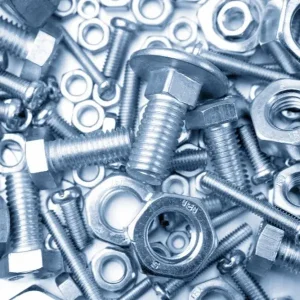
Our alkaline zinc-nickel electroplating processes provide exceptional thickness distribution, which is vital for complex geometric components manufactured by Italian precision machining facilities. Furthermore, compared to acid zinc-nickel plating, our alkaline systems minimize hydrogen embrittlement risks. This is critical for high-strength fasteners (grade 10.9 and 12.9) used in critical automotive assemblies and agricultural machinery applications.
Hours Salt Spray Resistance
Nickel Co-deposition Rate
REACH & RoHS Compliant
Cyanide & Hexavalent Chromium
Explore our wider range of metal finishing chemical additives, carriers, and passivation systems for Italian electroplating plants.
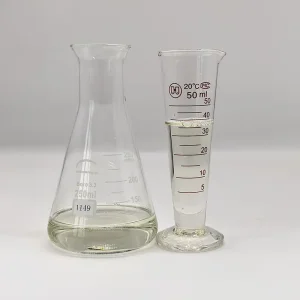
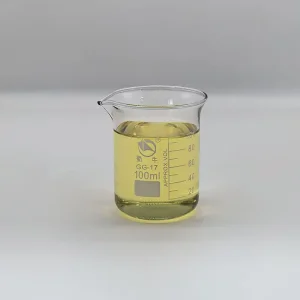
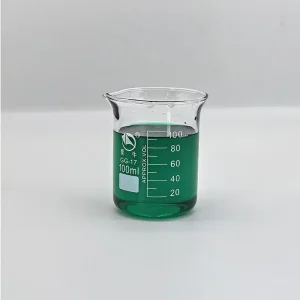
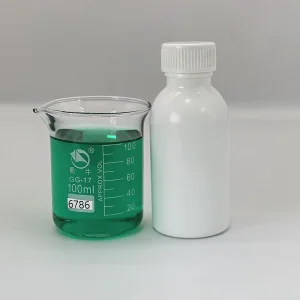
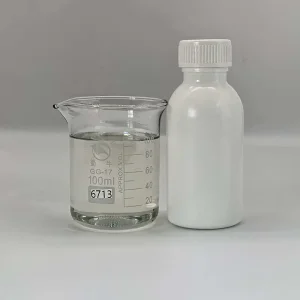
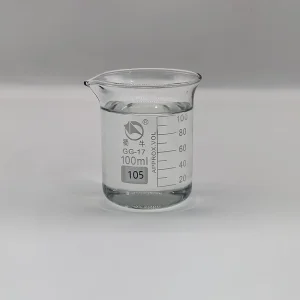
The application of Zinc-Nickel alloy coatings in Italy is highly segmented by regional manufacturing clusters. In the automotive hub of Turin and Piedmont, components must meet stringent standards set by Stellantis (e.g., CS.00055 and related international performance guidelines). These specifications demand that fasteners, engine bay brackets, chassis parts, and brake caliper pins withstand cyclic temperature changes and stone chipping without showing base metal corrosion. Our 6185 Alkaline Zinc-Nickel system provides the required ductility and high corrosion resistance under elevated temperatures, matching these specifications.
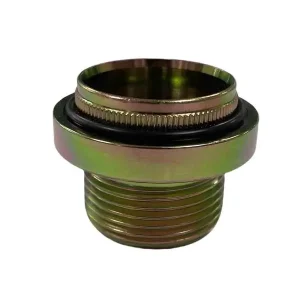
In the Emilia-Romagna region, celebrated as the "Motor Valley" (home to brands like Ferrari, Lamborghini, Maserati, and Ducati) and a major center for packaging machinery manufacturing, components face high mechanical loads and chemical exposure. Zinc-nickel electroplating provides a hard protective barrier that resists friction and wear. In the fluid power cluster of Reggio Emilia and Modena, high-pressure hydraulic valves, couplings, and steel tubes require consistent plating thickness inside inner passages to prevent rust under heavy hydraulic oil pressures. The high throwing power of Suzhou Hiyie’s chemical bath formulation ensures that internal bores receive uniform alloy deposits, avoiding premature component failure.
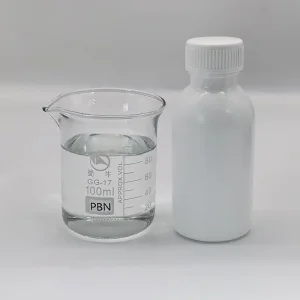
In Venice, Genoa, and Trieste’s maritime and port facilities, marine hardware is exposed to constant humidity and salinity. Trivalent passivated zinc-nickel alloy layers (like ZN-318 Blue and 216 Iridescent) act as protective shields, extending the operational life of components exposed to corrosive marine environments. Furthermore, Italy’s fashion and high-end hardware industries (centered around Tuscany and Lombardy) increasingly require hypoallergenic barrier layers. Here, our nickel plating systems, such as PBN Pearl Nickel, are used to create attractive, durable finishes that meet strict quality expectations.
Suzhou Hiyie Chemical Co., Ltd. operates a highly integrated supply chain that ensures stability and consistency for our global clients, especially in the demanding Italian market. Through partnerships with chemical research institutes and universities, we have established dedicated R&D centers in Wuhan and Shanghai. These centers focus on addressing challenges in surface finishing, such as improving cathodic current efficiency and reducing carbon footprint.
Our manufacturing facilities operate with computerized dosing controls and automated batch tracking, ensuring consistent product quality with minimal variations. To support the Italian market, we maintain strategic safety stock levels of key raw materials, helping buffer against global supply disruptions. Working with international shipping partners allows us to ensure reliable delivery times to key Italian ports, including Genoa, Trieste, La Spezia, and Naples.
In addition to chemical supply, Hiyie Chemical provides technical support. We assist Italian plating shops with bath analysis, Hull cell evaluations, and troubleshooting, helping our clients minimize production downtime and keep their plating lines running efficiently.
Environmental regulations in the EU, including REACH (Registration, Evaluation, Authorisation and Restriction of Chemicals) and the RoHS directive, place significant demands on the electroplating industry. High-priority tasks include the complete replacement of hexavalent chromium ($\mathrm{Cr^{6+}}$) in passivation processes. Hexavalent chromium, historically used for its self-healing corrosion protection, is classified as a carcinogen and mutagen, and is subject to strict restrictions under European chemical safety frameworks.
Suzhou Hiyie Chemical's trivalent chromium passivation products, such as ZN-318 Blue Passivation and 216 Iridescent Passivation, are formulated to comply with these environmental standards. These products utilize trivalent chromium ($\mathrm{Cr^{3+}}$) chemistry combined with specific nanoparticle additives. When applied over our Zinc-Nickel alloy base layers, they create a dense barrier that delivers high corrosion protection. This approach helps Italian electroplating companies remain compliant with ECHA guidelines while continuing to meet the technical demands of automotive and industrial customers.
The future of surface finishing lies in the integration of smart chemical control systems and environmentally friendly raw materials. As Italy's manufacturing sector moves toward Industry 4.0, electroplating plants are increasingly adopting digital tools. The technical roadmap for Hiyie Chemical’s zinc-nickel systems focuses on compatibility with automated dosing systems, online sensor tracking for bath concentration, and real-time monitoring of metal ratios.
We are also researching ways to improve current efficiency to help reduce energy consumption during plating. Lowering energy use per square meter of coated surface aligns with European carbon reduction targets. Our R&D team is working on next-generation organic additives that maintain stability under higher temperatures and chemical concentrations, helping extend bath lifespans and minimize wastewater treatment costs for plating operators.
Expert answers to common questions about alloy control, corrosion performance, and compliance for the Italian market.
Contact our technical engineering team for custom samples, bath analysis, and pricing for the Italian market.
Send Inquiry Now HIYIE
HIYIE