Best Copper Anti-Color Agent Manufacturers & Supplier

High-Performance Anti-Tarnish Formulations, Precision Surface Passivation, and Resilient Chemical Supply Chains for Next-Generation Global Industrial Electronics.

Featured Surface Treatment Products

Explore our precision-formulated chemical agents designed for high durability, anti-oxidation, and reliable electrical conductivity in demanding electronics and industrial environments.
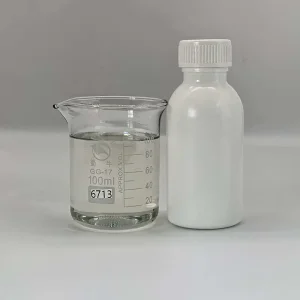
HITEC EN 6713 Mid Phosphorus Electroless Nickel

HITEC EN 6713 A/B/C Mid Phosphorus Electroless Nickel

View Technical Details
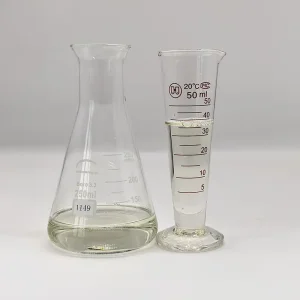
1149 Barrel Bright Nickel Plating

1149 Barrel Bright Nickel Plating

View Technical Details
31685 Rapid Brightening Nickel Plating

31685 Rapid Brightening Nickel Plating

View Technical Details
HITEC EN 6786 High Phosphorus Electroless Nickel

HITEC EN 6786 A/B/C High Phosphorus Electroless Nickel

View Technical Details
Chrome Plating Carrier 105

Chrome Plating Carrier 105

View Technical Details
J0-1 Ultra-Low Phosphorus Electroless Nickel

J0-1 Ultra-Low Phosphorus Electroless Nickel

View Technical Details
372 Alkaline Cyanide-Free Copper Plating

372 Alkaline Cyanide-Free Copper Plating

View Technical Details
8315 Alkaline Cyanide-free Bright Zinc Plating

8315 Alkaline Cyanide-free Bright Zinc Plating

View Technical Details

Understanding Copper Oxidation: Mechanics and Protection Solutions

Copper and its various alloys are fundamental components in modern electronic circuits, high-speed telecommunications hardware, and power transmission infrastructure. Because of its exceptional electrical and thermal conductivity, copper remains irreplaceable. However, its clean surface is highly thermodynamic-sensitive to atmospheric moisture, oxygen, hydrogen sulfide ($H_2S$), and oxides of nitrogen/sulfur. Exposure to these factors leads rapidly to the formation of cuprous oxide ($Cu_2O$) and cupric oxide ($CuO$). This reaction results in severe surface tarnishing, loss of solderability, and a massive increase in contact resistance.

The Chemical Threat Vector: When copper tarnishes, the contact resistance of connectors can rise exponentially from less than 10 milliohms to several ohms. In high-frequency, high-speed digital communications, this variation introduces significant signal attenuation and micro-interruptions that compromise operational stability.

A premium Copper Anti-Color Agent (commonly known as a copper anti-tarnish agent or copper passivation agent) functions by forming an ultra-thin, highly stable organic or hybrid molecular barrier on the copper surface. This nanometer-scale layer limits oxygen and moisture diffusion to the metal substrate. It preserves solderability and structural characteristics without altering the physical tolerances or electrical properties of the treated components.

260°C
Thermal Stability Limit
48 Hr+
Neutral Salt Spray Resistance
<2 mΩ
Post-Treatment Contact Resistance
0% VOC
Eco-Friendly Compliant Formulations

Technical Roadmap: From Classic BTA to Next-Gen Self-Assembled Monolayers (SAMs)

Industrial surface finishers and chemical developers use distinct chemical routes to inhibit copper corrosion. The selection of a technology pathway depends directly on application demands, performance profiles, and regional environmental standards.

1. Azole-Based Inhibitors (Classic Benzotriazole - BTA & Derivatives)

Benzotriazole (BTA) forms a coordinate covalent complex directly with copper atoms on the surface, producing a polymeric $Cu(I)$-BTA protective film. While cost-effective and highly effective under moderate indoor storage conditions, classic BTA formulations display limited thermal stability. They can degrade at temperatures above 100°C–120°C, rendering them unsuitable for modern lead-free reflow soldering processes that routinely peak around 260°C.

2. Substituted Mercapto-Benzothiazoles and Imidazoles

To address thermal and environmental limits, manufacturers use substituted imidazoles and mercapto-derivatives. These compounds create thicker, more heat-resistant films that withstand multiple reflow cycles. This makes them highly suitable for printed circuit board (PCB) fabrication, such as Organic Solderability Preservatives (OSP).

3. Next-Generation Nanometer Self-Assembled Monolayers (SAMs)

Representing the cutting edge of passivation technology, SAMs use long-chain organophosphonates, thiols, or silane derivatives. They form highly ordered, dense, and hydrophobic monomolecular arrays. Key benefits include:

  • Ultra-low film thickness: Typically 1 to 3 nanometers, ensuring zero impact on high-frequency signal transmission and mechanical tolerances.
  • Excellent thermal resistance: Maintains film integrity through multiple lead-free reflow cycles up to 260°C.
  • Preserved solderability: Easily dissolves in flux during assembly without leaving residues that could cause voiding or weak solder joints.

Localized Application Scenarios and Environmental Adaptations

Environmental conditions vary widely across manufacturing hubs, directly impacting copper corrosion rates. A high-quality copper anti-color agent must perform reliably under diverse localized conditions.

High-Humidity & Marine Zones

In regions like Southeast Asia and Southern China, relative humidity regularly exceeds 85%. Salt spray containing airborne halides accelerates galvanic corrosion, requiring thick, dense, hydrophobic passivation barriers.

Industrial Pollutant Corridors

Urban and heavy industrial areas exhibit high ambient levels of sulfur dioxide ($SO_2$) and hydrogen sulfide ($H_2S$). Specialty anti-color agents are formulated to selectively block sulfur gas diffusion and prevent blackening.

Precision Electronics Assemblies

In high-density PCB and micro-connector factories, post-plating processes require complete chemical compatibility with automated optical inspection (AOI) systems and sensitive cleanroom environments.

China's Chemical Supply Chain Resilience & Suzhou Hiyie Advantages

Global industrial manufacturing requires chemical suppliers that offer both advanced technology and highly reliable logistics. China has established a leading position in the specialty chemical supply chain due to integrated upstream raw materials, advanced infrastructure, and scaled production capabilities.

Located in the heart of the Yangtze River Delta, SUZHOU HIYIE CHEMICAL CO., LTD operates at the center of this efficient network. We maintain deep vertical integration with domestic raw material refineries to ensure uninterrupted production cycles, even during global chemical shortages. Our state-of-the-art facilities leverage automated blending and purification systems to guarantee high batch-to-batch consistency.

Supply Chain Reliability: Suzhou Hiyie Chemical provides global logistics support, buffer stock options, and customized packaging configurations (from 25kg drums to 1000kg IBC totes). This flexibility allows us to meet the short lead times and strict requirements of high-volume electronics packaging and plating lines worldwide.

About Suzhou Hiyie Chemical Co., Ltd.

SUZHOU HIYIE CHEMICAL Co.,LTD has a product portfolio that covers consumer electronics, communication equipment, semiconductor industry, automotive hardware, craft gifts, and more. The company has collaborated with multiple domestic and foreign chemical companies and universities to establish a mobile R&D center dedicated to solving technical challenges in the industry. Since its establishment, the company has set up R&D institutions in Wuhan and Shanghai. Its marketing network covers the Pearl River Delta, Yangtze River Delta, and Bohai Rim regions.

Our high-performance formulations and plating agents have been widely used and recognized by many well-known domestic and foreign companies such as Foxconn Technology Group, Qinghai Salt Lake Group, Chint Group, Hongbao Group, Stanley Group, Shifeng Group, and others, earning the company a good reputation and a wide market.

Why Partner With Us?

Personnel icon

Personnel

The company introduces a large number of staff, sales, and technical talents to deliver reliable support to our customers.

R&D icon

R & D

A flexible R&D mechanism allows us to meet specific performance and formulation requirements for custom applications.

Technology icon

Technology

Leveraging modern technologies to deliver environmentally friendly chemistry aligned with the latest green standards.

After-sales service icon

After-sales service

Dedicated pre-sale, technical sales, and after-sales support teams provide onsite bath management and troubleshooting.

Global Standards & Regulatory Compliance (RoHS & REACH)

The international chemical and surface treatment industry operates under strict environmental regulations. Standard chromate-based anti-tarnish systems have been phased out due to the high toxicity of hexavalent chromium ($Cr^{6+}$). Today, compliance with global environmental standards is essential for access to key markets:

  • RoHS 3.0 Directive: Our copper anti-color agents are free from lead, mercury, cadmium, hexavalent chromium, and restricted phthalates.
  • REACH SVHC Compliance: Formulations are audited to ensure they do not contain Substances of Very High Concern above regulated thresholds.
  • VOC Minimization: Water-soluble, low-VOC formulations reduce waste treatment loads and improve work environments on factory floors.

By selecting Suzhou Hiyie's advanced passivation formulations, manufacturers protect their copper products from oxidation while ensuring compliance with international environmental standards.

Technical Q&A: Copper Anti-Color Agents

Q1: How do copper anti-color agents prevent oxidation without altering electrical conductivity?
Advanced copper anti-tarnish formulations form an ultra-thin Self-Assembled Monolayer (SAM) that is typically only 1 to 3 nanometers thick. This molecular film acts as a barrier that prevents gas molecules ($O_2$, $H_2S$) from reaching the metal substrate. Because this organic layer is extremely thin, it is easily displaced under mechanical contact force or dissolved by fluxes during assembly. As a result, the copper's surface contact resistance remains low (often under 2 milliohms), preserving conductivity and solderability.
Q2: Can these agents withstand high-temperature lead-free reflow soldering?
Yes. Modern formulations, such as Suzhou Hiyie's advanced organic and hybrid polymer passivators, are designed to withstand temperatures up to 260°C. Standard BTA-based agents can degrade above 100°C, but our high-performance formulations maintain a stable protective film through multiple thermal reflow cycles. This reliability prevents surface oxidation during multi-step PCB assembly.
Q3: How are anti-color agents integrated into an existing plating line?
These agents are typically integrated as a final immersion step after copper electroplating or acid copper pickling. A standard processing sequence involves: copper plating > drag-out recovery > thorough rinsing > immersion in the anti-color agent bath (typically 20–60 seconds at 25°C–50°C) > DI water rinsing > drying. Maintaining correct bath parameters—such as pH, concentration, and temperature—is essential for forming a uniform protective film.
Q4: What is the typical shelf-life protection of a treated copper surface?
Under typical warehouse storage conditions (temperature below 30°C, relative humidity under 60%), copper parts treated with our high-grade anti-color agents remain tarnish-free for 12 to 24 months. In high-humidity environments, treated parts show significantly better resistance to oxidation compared to untreated copper.
Q5: Are these chemical formulations compliant with REACH and RoHS standards?
Yes. All our modern passivation agents are fully compliant with RoHS 3.0 and REACH regulations. They contain no hexavalent chromium ($Cr^{6+}$), halogens, or toxic heavy metals, providing a safer alternative to traditional chromate-based conversion coatings.

Complete Plating Portfolio & Auxiliary Agents

Browse our broader range of electroplating, passivation, and surface finishing chemicals designed to work alongside our anti-color agents for complete quality control.
216 High Corrosion-resistant lridescent Trivalent Zinc Passivation

216 High Corrosion-resistant Iridescent Trivalent Zinc Passivation

View Technical Details
FS100 Semi-Bright Nickel Plating

FS100 Semi-Bright Nickel Plating

View Technical Details
6185 Alkaline Zinc-Nicke Plating

6185 Alkaline Zinc-Nickel Plating

View Technical Details
ZN-318Blue Trivalent Zinc-Nickel Passivation

ZN-318 Blue Trivalent Zinc-Nickel Passivation

View Technical Details
672 High-Speed Bright Acid Copper Plating

672 High-Speed Bright Acid Copper Plating

View Technical Details
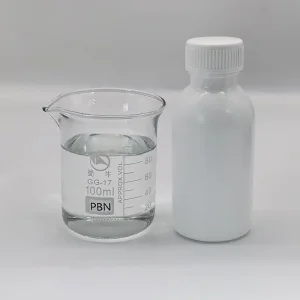
PBN Pearl Nickel

PBN Pearl Nickel

View Technical Details
HITEC EN 6713 Mid Phosphorus Electroless Nickel

HITEC EN 6713 A/B/C Mid Phosphorus Electroless Nickel

View Technical Details
HITEC EN 6786 High Phosphorus Electroless Nickel

HITEC EN 6786 A/B/C High Phosphorus Electroless Nickel

View Technical Details