Explore our leading surface treatment and chemical plating catalog engineered for superior corrosion protection, hardness, and durability.
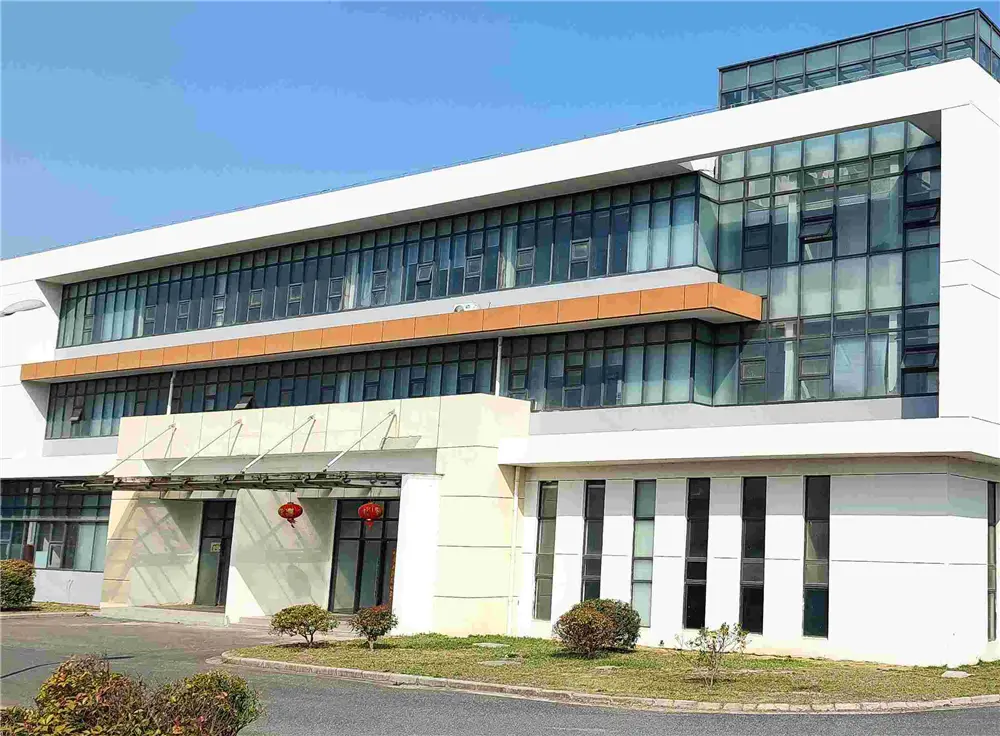
SUZHOU HIYIE CHEMICAL CO., LTD is a premier, ISO-certified pioneer in the global electroplating and electroless surface finishing sector. Our comprehensive product portfolio covers critical applications across consumer electronics, high-frequency telecommunication devices, micro-semiconductor packaging, high-stress automotive hardware, and aerospace components.
We operate dynamic R&D partnerships with leading chemical research universities and industrial centers, running state-of-the-art mobile R&D nodes in Wuhan and Shanghai. Through our advanced sales and distribution network spanning the Pearl River Delta, Yangtze River Delta, and the Bohai Rim, we deliver high-performance chemistry trusted by global giants, including Foxconn Technology Group, Qinghai Salt Lake Group, Chint Group, Hongbao Group, Stanley Group, and Shifeng Group.
An authoritative guide to understanding chemical properties, structural characteristics, global trends, and optimized process mechanics.
Medium phosphorus electroless nickel plating (referred to as ENP or chemical nickel) utilizes an autocatalytic chemical reduction to deposit a uniform, amorphous-crystalline nickel-phosphorus alloy matrix onto a catalytic substrate. Unlike electrolytic processes, which are governed by Faraday's laws of electrolysis and suffer from current density distribution anomalies, electroless nickel relies on the oxidation of a reducing agent (commonly sodium hypophosphite, $NaH_2PO_2 \cdot H_2O$) on a catalytic metal surface.
The deposition reaction of medium phosphorus (typically containing 6-9 wt% phosphorus) is represented through the following fundamental reactions:
The phosphorus content (6-9 wt%) is critical. It acts as an alloying agent that distorts the face-centered cubic (FCC) crystal lattice of pure nickel. At this concentration, the matrix exists in a mixed state of microcrystalline and amorphous phases, presenting the ultimate equilibrium between hardness, wear resistance, and high-quality corrosion resistance.
The industrial landscape for chemical nickel is undergoing an evolution driven by green chemical mandates, process efficiency requirements, and advanced substrate technologies. Below are the trends reshaping the global manufacturing supply chains:
Understanding how phosphorus percentage directly influences mechanical and chemical characteristics is imperative for design engineers. The following matrix illustrates the performance spectrum:
| Property Parameter | Low Phosphorus (1-5% P) | Medium Phosphorus (6-9% P) | High Phosphorus (>10% P) |
|---|---|---|---|
| Crystal Structure | Crystalline (Microcrystalline) | Mixed (Crystalline + Amorphous) | Fully Amorphous (Non-magnetic) |
| As-Plated Hardness (HV0.1) | 650 - 750 HV | 500 - 600 HV | 450 - 500 HV |
| Heat-Treated Hardness (400°C) | 900 - 1000 HV | 950 - 1050 HV | 850 - 950 HV |
| Salt Spray Corrosion Resistance | Moderate (approx. 24-96 hrs) | High (approx. 96-240 hrs) | Exceptional (>500 hrs, non-magnetic) |
| Solderability & Wire Bonding | Excellent | Good to Very Good | Poor (Requires activation) |
The data clearly demonstrates why medium phosphorus chemical nickel is selected for B2B procurement: it provides the most versatile crossover, offering superior hardness after heat treatment alongside strong native corrosion resistance and solderability.
How our tailored formulations solve core engineering challenges in demanding industrial environments.
Providing uniform plating thickness and robust copper adhesion characteristics required by components like smartphone brackets, connector shells, and electromagnetic shielding. Compliant with Foxconn requirements.
Engineered for high wear resistances inside fuel injection systems, piston rings, valve guides, and brake pistons, ensuring reliability under extreme mechanical friction.
Essential for the under-bump metallization (UBM) process in silicon wafer fabrication, supplying a reliable solder diffusion barrier that prevents structural failure.
How our Shanghai and Wuhan R&D Centers are driving the future of eco-friendly and smart surface finishing.
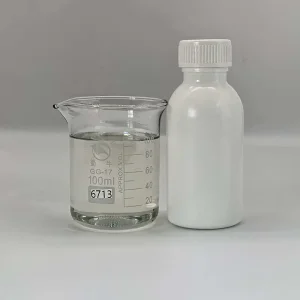
Perfected completely non-toxic, bismuth-stabilized formulation systems for the HITEC EN 6713 product line, successfully replacing lead additives with zero drop in bath longevity.
Developing nickel-phosphorus matrices co-deposited with nano-materials (e.g., carbon nanotubes, PTFE) to achieve ultra-low friction coefficients under dry friction conditions.
Pioneering electrodialysis processes for continuous by-product removal, allowing for near-infinite chemical baths and minimizing eco-footprints for green manufacturing.
A look into our strict technical principles and why we remain the preferred B2B chemical nickel supplier.
We source top-tier doctoral and engineering talents from leading chemical universities to oversee production quality control and customer compliance support.
Our flexible research mechanism allows us to engineer specific formulas tailored to client performance standards (hardness, deposition rate, gloss levels).
We deploy modern environment-friendly methodologies that align fully with modern global compliance standards, avoiding all harmful stabilizers.
We support B2B clients through every step—from pilot tank design and chemical makeup to continuous titration and troubleshooting audits.
Technical answers to help buyers and engineers select the proper chemical nickel formulations.
Stay updated with our research breakthroughs and corporate milestones.

As we celebrate the transition into a new year, Suzhou Hiyie is excited to roll out our latest zero-stabilizer high-longevity chemical nickel formulations. Our R&D nodes in Wuhan and Shanghai are currently co-developing closed-loop waste reduction processes to assist B2B manufacturing partners in meeting carbon neutrality targets.
Explore our specialized alloys and functional metal finishes for advanced electronics and harsh environmental protections.
 HIYIE
HIYIE