China Zinc Nickel Black Passivator Manufacturer & Manufacturers

Providing next-generation trivalent chromium chemical technologies to optimize high-performance corrosion protection in global automotive, aerospace, and electronics surface finishing.

Industrial White Paper: Zinc-Nickel Black Passivation

Understanding advanced electrochemical parameters, environmental compliance, and high-performance applications in modern corrosion engineering.

Evolution of Black Passivation Chemistry

Over the past two decades, environmental mandates and standard adjustments (such as RoHS and REACH regulations) have phased out traditional hexavalent chromium (Cr6+) chemical treatments. Hexavalent systems, while offering self-healing characteristics, posed severe health and ecological risks. This led to the development of trivalent chromium (Cr3+) formulations.

For applications where extreme corrosion resistance is required, pure zinc coatings have increasingly given way to zinc-nickel (Zn-Ni) alloy electroplating. A deposit containing 12-15% nickel content presents a highly corrosion-resistant intermetallic structure. When paired with an engineered zinc nickel black passivator, the coating system achieves superior protection and a uniform cosmetic finish.

The Chemistry of Trivalent Black Conversion Coatings

The mechanism of trivalent black passivation on zinc-nickel alloys relies on a controlled acid attack on the plated layer. This local drop in acid levels drives the deposition of chromium hydroxides and nickel-trivalent chromium complexes onto the surface.

To produce the deep black appearance, transition metal compounds (typically iron, cobalt, or manganese chemistry) are added to the passivating bath. These metals integrate into the film, shifting its structure to absorb light and create a rich black finish. Post-passivation sealants or topcoats are then applied to close up the microscopic structure, raising salt spray resistance metrics to industry-leading levels.

Technical Benchmark: Trivalent zinc-nickel black passivators applied over a standard 12-15% alloy coating regularly survive over 1000 hours of neutral salt spray testing (NSST per ASTM B117 / ISO 9227) without showing red rust, and over 240 hours without white rust, meeting strict standards such as GMW3044 and Ford WSS-M21P44.

Key Industry Trends Shaping Global Plating Technologies

The global surface finishing market is adapting to three major technical trends:

  • Electrification of Vehicles (EVs): Electric vehicle components demand durable chemical barriers. High-voltage battery systems, drive units, and chassis bolts need thin-film coatings that provide excellent corrosion defense without causing hydrogen embrittlement or changing thread configurations.
  • Stricter Chemical Regulations: Global companies are eliminating all hexavalent chromium traces and seeking cobalt-free trivalent passivators. Formulators are developing cobalt-free solutions that achieve equivalent barrier performance.
  • Integration of Sealants and Friction Modifiers: Modern passivators are part of a multi-step system. Topcoats must integrate seamlessly, providing consistent torque-tension properties (friction coefficient ranges of 0.12 to 0.18) for critical automotive fasteners.
1000+
Salt Spray Resistance (Hrs)
15%
Optimal Nickel Alloy Ratio
100%
RoHS & REACH Compliant
2
Dedicated R&D Centers

China Factory 4.0: Supply Chain Resilience & Efficiency

How Suzhou Hiyie Chemical integrates smart manufacturing and university R&D to secure reliable global supply chains.

Global procurement teams need partners that offer more than chemical formulas; they require reliable, scalable supply networks. Suzhou Hiyie Chemical Co., Ltd. coordinates its manufacturing through advanced processes to ensure batch-to-batch consistency and trace chemical quality from raw inputs to finished products.

By using real-time monitoring of bath parameters during synthesis, Hiyie Chemical maintains tight control over trivalent chromium complexes and metal ratios. This results in stable formulations with long tank life, minimizing waste and reducing chemical consumption for industrial platers worldwide.

We work in collaboration with top universities and research institutes, maintaining dedicated R&D facilities in Wuhan and Shanghai. This lets us quickly transition new chemical discoveries into ready-to-use industrial solutions.

Company Culture and Lab

Integrated Business Ecosystem & Industry Partnerships

Our solutions are designed for demanding applications across consumer electronics, telecom hardware, semiconductors, and automotive systems. Through deep industry partnerships, we have earned the trust of major industrial players and global manufacturers, including:

Foxconn Group Consumer Electronics
Chint Group Power & Electrical
Stanley Group Tools & Hardware
Shifeng Group Automotive & Machinery

Why Choose Suzhou Hiyie Chemical

Combining technological innovation with dedicated customer support and environmental responsibility.

Personnel

Personnel

We recruit and develop skilled chemical engineers, sales professionals, and customer support representatives committed to meeting your specific requirements.

R & D

Flexible R & D

Our adaptive R&D structures allow us to customize plating formulations and passivation systems to match your unique operating parameters.

Technology

Advanced Tech

We supply advanced plating technologies engineered to respect global environmental regulations and reduce your overall chemical footprint.

After-sales service

After-Sales Support

Our dedicated technical service teams offer on-site analysis, bath troubleshooting, and process optimization to ensure trouble-free production lines.

Chemical Product Families

Comprehensive plating chemistries and conversion coatings for diverse substrate requirements.

Nickel Plating Systems

  • • FS100 Semi-Bright Nickel Plating
  • • 1149 Barrel Bright Nickel Plating
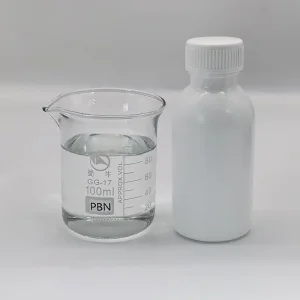
  • • PBN Pearl Nickel Process
  • • 31685 Rapid Brightening Nickel Plating

Electroless Nickel Processes

  • • J0-1 Ultra-Low Phosphorus EN
  • • HITEC EN 6786 High Phosphorus EN
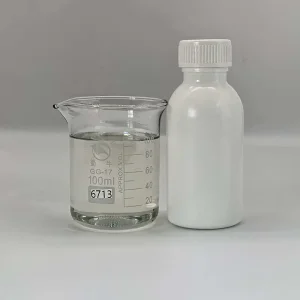
  • • HITEC EN 6713 Mid Phosphorus EN
  • • Fully Lead-free & Cadmium-free

Zinc & Zinc-Nickel Alloys

  • • 6185 Alkaline Zinc-Nickel Plating
  • • 8315 Alkaline Cyanide-free Bright Zinc
  • • High Corrosion Trivalent Passivators
  • • Cobalt-Free Black Passivation Options

Localized Application Scenarios

How trivalent zinc-nickel black passivators resolve technical requirements across various operating conditions.

Automotive Under-the-Hood Fasteners

Fasteners and fittings near vehicle engines face high operating temperatures, road salt spray, and mechanical stress. Trivalent black passivation provides reliable protection without affecting thread clearance or torque behavior.

Consumer Electronics Chassis

In laptops and telecom hardware, black passivators deliver a deep, non-reflective appearance while maintaining good electrical grounding properties. The chemistry helps prevent zinc whisker growth that can disrupt circuits.

Marine and Outdoor Structural Hardware

For brackets and couplings used in outdoor environments, our passivator systems act as a robust barrier against chloride-rich atmosphere, preventing galvanic corrosion between aluminum structures and steel bolts.

News & Events

Recent developments and announcements from Suzhou Hiyie Chemical.

Happy Chinese New Year
17 Feb 2026

The Snake ushers in blessings as we bid the old year farewell; The Horse brings spring as we embark on a new journey.

As we welcome the new year, Suzhou Hiyie Chemical reflects on our growth in developing environmentally conscious surface finishing chemicals. The New Year bell rings the prelude to progress; we continue our pursuit of chemistry solutions that support sustainable development across global industries.

Read full story →

Frequently Asked Questions (FAQ)

Answers to common questions regarding zinc-nickel black passivation, bath maintenance, and troubleshooting.

Why is nickel content critical in zinc-nickel alloy electroplating before black passivation?
To achieve high corrosion protection, the nickel ratio in the alloy deposit must fall between 12% and 15%. If the nickel percentage is too low, the coating acts like standard zinc, reducing its resistance to red rust. If nickel levels exceed 16%, the deposit becomes passive, making it difficult for conversion coatings to form a uniform black film.
What causes a haze or iridescent film instead of a deep black finish?
Hazing or iridescent colors can result from several bath parameters. Check if the pH value is too low, or if the concentrations of transition metals (iron, cobalt) are depleted. Also, ensure the iron content in your acid dip is under control, and verify that the operating temperature is maintained within the manufacturer's recommended range (typically 20°C to 30°C).
How does a trivalent black passivator comply with RoHS and REACH standards?
Unlike traditional hexavalent processes, trivalent black passivators use Cr3+ ions, which do not fall under the strict restrictions governing Cr6+ compounds. Trivalent systems avoid toxic, carcinogenic substances, helping manufacturers export products to markets with strict environmental guidelines.
Is a post-passivation sealant or topcoat necessary?
Yes. Trivalent passivation coatings are thin and micro-porous. Applying an inorganic or hybrid organic-inorganic sealant helps protect this structure, significantly boosting salt spray resistance. It also allows for the addition of friction modifiers to ensure consistent torque behavior.
How can I extend the bath life of my black passivator system?
To maximize bath life, prevent metal contamination (specifically zinc and iron build-up) through proper rinsing before the passivation tank. Periodically analyze bath chemistry via titration, maintain correct pH levels, and utilize filtration systems to remove suspended particles.
What is the difference between acid and alkaline zinc-nickel electroplating processes?
Alkaline systems provide excellent thickness distribution across complex parts, making them ideal for fasteners and complex geometries. Acid systems offer faster plating rates and high cathode efficiency, which is useful for simple geometries or castings, though they require careful control of alloy distribution.
How do I test the adhesion of a passivated coating?
Adhesion is typically tested using tape pull tests, burnishing, or thermal shock tests (such as heating parts to 150°C-220°C followed by water quenching). A quality formulation ensures the passivated film remains bonded to the zinc-nickel base without blistering or peeling.