Explore our flagship electroplating concentrates, electroless nickel baths, and eco-friendly trivalent passivation chemistry formulated for maximum corrosion prevention and operational efficiency.
As modern manufacturing transitions toward extreme durability, miniaturization, and aggressive environmental compliance, chemical plating chemistry must evolve far beyond legacy formulations.
Next-generation industrial applications require sub-micron precision with multi-thousand-hour neutral salt spray performance (ASTM B117). Advanced alloy plating, such as alkaline zinc-nickel (12-15% Ni codeposition), provides sacrificial barrier protection superior to standard electro-galvanizing, preventing galvanic micro-corrosion under extreme thermal cycles.
Strict global regulations—including EU REACH, RoHS 3, and EPA wastewater standards—have rendered legacy hexavalent chromium (Cr6+) and cyanide-based electroplating processes obsolete. Modern specialty chemical manufacturers deliver high-performance cyanide-free copper, trivalent passivation, and PFOS-free wetting agents without sacrificing kinetic deposition rates.
The rapid expansion of 5G infrastructure, autonomous automotive radar, and high-density interconnect (HDI) PCBs demands ultra-uniform micro-throwing power. Electroless Nickel Immersion Gold (ENIG) and mid/high-phosphorus chemistry ensure defect-free solderability, uniform layer build-up, and zero magnetic interference in sensitive electronics assemblies.
Our formulations are engineered to control micro-crystallization growth, stress distribution, and cathodic efficiency across high-throughput industrial plating lines.
Alkaline Zinc-Nickel electroplating represents the gold standard for automotive under-the-hood components and high-strength fasteners. Unlike acidic processes, alkaline chemistry guarantees exceptional metal distribution ratio (throwing power) between high- and low-current-density areas, eliminating non-uniform thickness on complex geometries.
Electroless nickel plating operates via autocatalytic reduction without external electric current, resulting in 100% uniform deposit thickness on complex internal cavities, valving systems, and blind holes.
Transitioning away from hazardous sodium cyanide baths is both a safety imperative and an operational bottleneck for many finishing plants. Our non-cyanide formulations eliminate operator hazards while delivering mirror-bright cosmetic aesthetics.
For high-end consumer electronics, luxury hardware, and interior automotive trim, visual texture and tactile elegance are critical differentiating factors.
Our specialized chemical solutions are integrated into high-volume manufacturing lines worldwide, empowering tier-1 suppliers and global OEMs to achieve stringent engineering performance targets.
In the EV era, battery housings, brake calipers, power electronics heat sinks, and steering assemblies face harsh road salt and high thermal loads. Our 6185 Alkaline Zinc-Nickel combined with 216 Trivalent Passivation guarantees $>1200\text{ hrs}$ red rust resistance, safeguarding critical structural and electrical components.
High-frequency RF cavities, waveguides, and optical fiber connector housings require precise electrical conductivity and oxidation protection. HITEC EN Series Electroless Nickel provides non-magnetic, corrosion-proof barrier coats that prevent signal attenuation and intermodulation distortion.
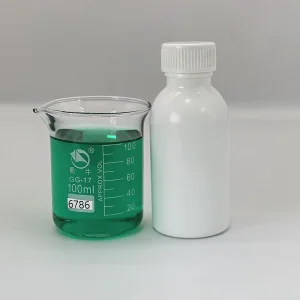
Downhole drilling tools, ball valves, and aerospace hydraulic actuators operating under high pressures and chemical corrosives rely on HITEC EN 6786 High-Phosphorus chemical plating. It deposits an amorphous, non-porous nickel-phosphorus alloy matrix resistant to sour gas ($H_2S$) attack.
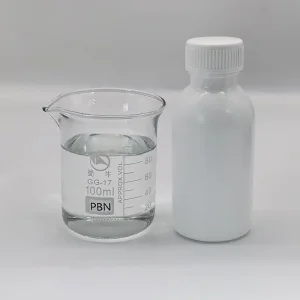
Smartphones, wearable fitness trackers, and high-end hardware require scratch-resistant, luxurious visual surface finishes. Products like PBN Pearl Nickel and 672 High-Speed Bright Acid Copper deliver mirror smoothness and satin elegance without fingerprint smudging.
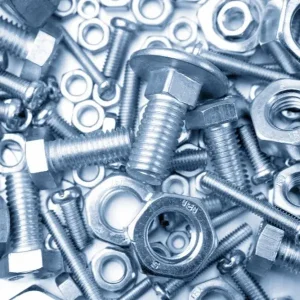
Industrial structural bolts, hydraulic pistons, and agricultural machinery components demand robust protection against mechanical friction and environmental degradation. Our bright zinc passivators provide high-friction control and extreme durability.
Delicate decorative articles, luxury luggage buckles, and architectural hardware benefit from micro-level thickness uniformity, excellent levelling properties, and non-tarnishing clear topcoats.
SUZHOU HIYIE CHEMICAL CO., LTD. stands at the forefront of surface treatment innovation, specializing in high-performance organic additives, electroplating specialty chemicals, and advanced surface functionalization systems.
To overcome persistent technical bottlenecks in electrodeposition—such as micro-cracking, bath instability, heavy metal toxicity, and non-uniform current distribution—HIYIE has established dedicated R&D centers in Shanghai and Wuhan. In close collaboration with prominent universities and electrochemical research institutes, our engineering team continuously develops sustainable, high-efficiency plating formulations.
Our robust marketing and technical support network spans the Yangtze River Delta, Pearl River Delta, and Bohai Rim regions, providing turnkey chemical maintenance, real-time bath troubleshooting, and custom formulation development.
Our chemical solutions are qualified and specified by world-leading industrial manufacturing groups and technology conglomerates, establishing our authority in the surface finishing sector:
Ensuring seamless operational continuity while adhering to global ESG imperatives through optimized chemical consumption and local engineering support.
All chemical lines are fully certified against banned substances under EU REACH Annex XVII and SVHC lists. Formulations are 100% free from lead (Pb), cadmium (Cd), mercury (Hg), hexavalent chromium ($Cr^{6+}$), and polybrominated biphenyls.
Our low-sludge chemistry simplifies wastewater treatment unit operations. By eliminating heavy complexing agents and toxic cyanides, industrial electroplaters achieve significant reductions in chemical oxygen demand (COD) and sludge disposal overheads.
We provide complete bath analysis, Hull cell troubleshooting, titration protocol setup, and parameter optimization. Technical field engineers conduct routine bath maintenance checks to guarantee continuous production uptime.
Pioneering the future of surface functionalization through intelligent chemical bath monitoring, nano-composite matrices, and low-energy deposition chemistry.
Integrating real-time inline spectroscopic analysis with dynamic automatic dosing pumps, ensuring chemical concentration variance remains under $\pm 1.5\%$ during continuous high-speed reel-to-reel plating operations.
Incorporating nano-diamonds, PTFE, and graphene nanoplatelets into electroless nickel and trivalent chromium matrices to achieve self-lubricating, ultra-low friction coatings ($\mu < 0.08$) for next-generation aerospace bearings.
Developing low-energy electroless nickel and copper activation chemistry capable of operating at reduced thermal thresholds ($45-60^\circ\text{C}$ vs standard $85-90^\circ\text{C}$), cutting plant carbon footprints by up to 40%.
Expert answers to critical engineering, chemical stability, and process optimization queries encountered in modern surface finishing plants.
Alkaline Zinc-Nickel solutions (like 6185) deliver vastly superior throwing power compared to acid baths. In complex geometric parts like brake calipers or recessed automotive stampings, alkaline chemistry ensures uniform alloy deposition ($12-15\%\text{ Ni}$) in both high- and low-current-density regions, eliminating thin spots vulnerable to premature corrosion.
High Phosphorus ($10-13\%\text{ P}$) offers an amorphous non-magnetic structure with maximum corrosion resistance against acids. Mid Phosphorus ($6-9\%\text{ P}$) balances fast deposition speed with bright aesthetic appeal. Ultra-Low Phosphorus ($1-3\%\text{ P}$) provides maximum as-plated hardness, wear resistance, and high electrical conductivity for microelectronic applications.
Cyanide-free copper processes (such as 372 Series) utilize advanced organic complexing agents that provide equal or superior bond adhesion on steel and zinc die-cast substrates. They completely eliminate lethal cyanide exposure risks, reduce hazardous waste treatment overheads, and maintain highly stable bath chemistries.
Modern trivalent passivation chemical solutions (such as 216 Iridescent Passivation) use nano-zirconium or nano-silica fluorides to form a dense self-healing conversion film over the zinc or zinc-alloy deposit. When combined with specialized post-dip sealants, they easily exceed $1000\text{ hours}$ neutral salt spray without white or red rust.
Select from our specialized line of high-purity electroplating brighteners, strike chemistry, and corrosion inhibitors.
 HIYIE
HIYIE