Explore our leading product range of highly specialized plating additives and chemical formulations engineered for extreme industrial performance.
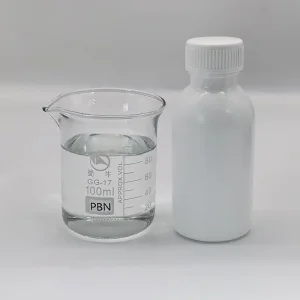
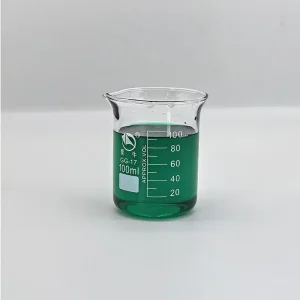
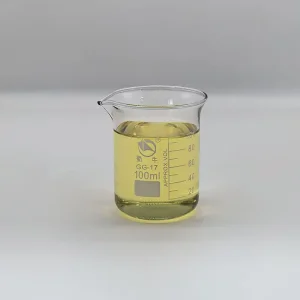
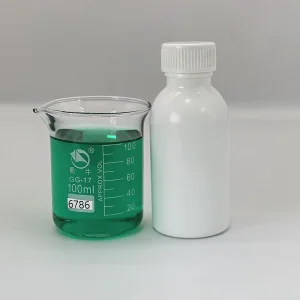
Understanding the engineering demands, chemical composition, and electrochemical performance of modern anti-corrosive barriers.
In modern industrial manufacturing, metal surfaces must endure harsher environments than ever before. Whether subjected to marine conditions, automotive under-hood thermal cycles, or high-humidity electronic applications, standard zinc or nickel plating often falls short of contemporary lifecycle requirements. This is where high-performance Silver-Zinc coatings and advanced alloy depositions come in.
Historically, zinc plating has functioned as the standard sacrificial protection mechanism for steel substrates. By providing a sacrificial anode, zinc prevents the underlying iron from oxidizing. However, under high stress and corrosive environments, pure zinc oxidizes too rapidly, leading to early mechanical degradation. Through scientific innovation, pairing zinc with metals like silver or nickel dramatically slows down this oxidation rate while enhancing functional attributes such as electrical conductivity and surface hardness.
For applications where low contact resistance and high corrosion protection must coexist, silver-zinc coatings and their counterpart alloy formulations (such as alkaline zinc-nickel electrodeposits) offer an optimal compromise. The incorporation of protective, high-density alloy elements increases the barrier resistance, preventing the penetration of chloride ions and other corrosive agents down to the substrate.
The electroplating process utilizes complex chemical baths containing precisely balanced metallic salts, organic brighteners, carrier surfactants, and complexing agents. For example, our 6185 Alkaline Zinc-Nickel Plating bath maintains an alloy ratio consisting of 12-15% nickel co-deposited with zinc. This specific atomic composition yields a structural phase that is significantly more noble than pure zinc, delivering up to ten times the corrosion protection of traditional coatings.
By leveraging similar engineering pathways, modern silver-zinc technologies establish thin, dense protective topcoats that satisfy both high-conductivity demands (highly sought-after in electronics and connectors) and physical protection requirements (ideal for aerospace fasteners). These technologies are reinforced using advanced post-treatment techniques, such as the 216 High Corrosion-Resistant Iridescent Trivalent Zinc Passivation, which deposits a nanostructured chromium-trivalent conversion layer to secure the underlying metallic crystals against oxidation.
A visual summary of our testing capacity, industry track record, and research footprint.
How our chemistry-centric approach solves localized adhesion, conductivity, and durability concerns.
Established as an organic chemical and plating formulation leader, SUZHOU HIYIE CHEMICAL CO., LTD operates at the nexus of academic research and global industrial needs. Our strategic collaborations with domestic and international universities have allowed us to form dedicated mobile R&D units. These scientific networks, centered in our Wuhan and Shanghai institutes, focus on overcoming chemical challenges that limit conventional coating longevity.
Hiyie’s extensive research portfolio stretches into advanced consumer electronics, industrial communication equipment, semiconductor structures, heavy automotive hardware, and aesthetic craft gifts. Because different industries require custom surface characteristics, our laboratory designs flexible formulations. For example, our HITEC EN 6786 A/B/C High Phosphorus Electroless Nickel delivers exceptional chemical resistance in acidic environments, while our 8315 Alkaline Cyanide-free Bright Zinc Plating provides an environmentally friendly, high-brightness surface finish without compromising standard durability profiles.
Our commitment to technical excellence has earned the trust of global tech giants and manufacturing leaders, including Foxconn Technology Group, Qinghai Salt Lake Group, Chint Group, Hongbao Group, Stanley Group, and Shifeng Group. This cross-industry validation highlights our ability to deliver highly uniform coating chemistry capable of passing rigid QA validation protocols.
Our flexible R&D structure in Shanghai and Wuhan supports immediate bath analysis, custom organic additive synthesis, and tailor-made formulations designed to meet unique technical constraints.
We prioritize green chemical design, offering cyanide-free plating baths and trivalent chromium passivations that align with strict EU RoHS and REACH environmental mandates.
Our operations spanning the Pearl River Delta, Yangtze River Delta, and Bohai Rim ensure rapid shipping, field technical assistance, and continuous bath optimization support.
Why global manufacturing OEMs are consolidating chemical supply chains with high-output Chinese partners.
For international buyers managing complex engineering portfolios, purchasing plating chemicals from a specialized Chinese chemical manufacturer offers concrete benefits in supply chain resilience and cost efficiency. The eastern industrial zone of China, specifically the Yangtze River Delta, provides a highly integrated industrial ecosystem. Suzhou Hiyie Chemical exploits this localization to secure raw chemical intermediates directly, reducing transit bottlenecks and insulating clients from price swings.
Working with a centralized manufacturer in China provides three key operational advantages:
| Plating Category | Product Designation | Core Application Profile | Corrosion Resistance Index (Salt Spray) |
|---|---|---|---|
| Alloy Electroplating | 6185 Alkaline Zinc-Nickel Plating | Automotive fasteners, brake systems, under-hood hardware | Up to 1000 hours (white rust protection) |
| Electroless Nickel | J0-1 Ultra-Low Phosphorus Electroless Nickel | High wear parts, chemical valves, electronics | Excellent acid/alkali resistance |
| Passivation Chemistry | 216 Iridescent Trivalent Passivation | Post-zinc treatment, eco-friendly metal finishing | Passes strict European salt-spray benchmarks |
| Bright Nickel Plating | 31685 Rapid Brightening Nickel Plating | Consumer electronics outer shells, decorative hardware | Excellent brightness and throwing power |
Aligning chemical processes with international directives and localized factory safety policies.
Modern industrial companies operate under strict international regulatory frameworks. Environmental standards like RoHS (Restriction of Hazardous Substances) and REACH (Registration, Evaluation, Authorization and Restriction of Chemicals) have reshaped electroplating lines worldwide. Traditional plating baths containing hexavalent chromium (Cr6+) or cyanide systems are being phased out in favor of safer alternatives.
Suzhou Hiyie Chemical addresses these compliance challenges directly. Our catalog includes high-performance alternatives like the 8315 Alkaline Cyanide-free Bright Zinc Plating system, which delivers the performance of traditional cyanide zinc formulations without their hazardous waste profile. Similarly, our ZN-318 Blue Trivalent Zinc-Nickel Passivation replaces hexavalent options, helping factories comply with international safety regulations while achieving superior salt spray results.
Beyond providing chemistry, our localization support model focuses on real-time plant integration. Plating baths are dynamic systems affected by changes in current density, drag-out, pH variation, and metallic contamination. We support our customers through chemical monitoring, bath-replenishment guidelines, and wastewater treatment solutions designed to match local environmental standards.
Answers to technical questions from electroplating engineers and procurement managers.
Alkaline Zinc-Nickel Plating containing 12-15% nickel co-deposition provides significantly better performance than pure zinc plating. First, it offers superior corrosion resistance, surviving up to 1000 hours of salt spray testing before showing red rust. Second, it reduces galvanic corrosion when mated with aluminum components, a common requirement in automotive assemblies. Third, it provides higher thermal resistance, meaning the plating layer remains stable at operating temperatures up to 200°C without losing its protective qualities.
Electrolytic nickel plating uses an external electrical current to deposit nickel ions onto the substrate, which can lead to uneven thickness on complex parts. Electroless Nickel (EN), like our HITEC EN 6786, uses a chemical reducing agent (hypophosphite) to deposit the metal uniformly across all surfaces, regardless of geometry. This autocatalytic process ensures consistent coating thickness even in blind holes and interior channels, while also improving wear resistance and hardness depending on the phosphorus level.
Hexavalent chromium (Cr6+) is a known carcinogen and is heavily restricted under RoHS and REACH regulations. Trivalent chromium (Cr3+), utilized in our 216 High Corrosion-resistant Iridescent Passivation, is much safer for workers and easier to manage in wastewater treatment. Modern trivalent passivations, when formulated with nano-sized silica sealers, deliver equivalent or superior corrosion protection compared to old hexavalent treatments.
Organic brighteners and carriers act as surfactants, modifying how metal crystals form at the cathode surface. By refining the grain structure, they prevent rough, dendritic deposits and encourage a smooth, bright finish. Additionally, they help stabilize the current distribution, improving thickness consistency across the plated part.
We use rigorous quality control processes at our Wuhan and Shanghai R&D facilities. Every production batch of plating additives is tested using Hull cell analysis, atomic absorption spectroscopy (AAS), and high-performance liquid chromatography (HPLC). This ensures that critical active concentrations, brightener ratios, and carrier stability meet our strict specifications before packaging.
Yes. Our 8315 Alkaline Cyanide-free Bright Zinc Plating chemistry uses advanced chelating agents to achieve the uniform distribution and throwing power of traditional cyanide baths. This allows manufacturers to meet strict safety and environmental standards while maintaining excellent plating quality and adhesion.
Discover more specialized copper, zinc, chrome, and passivation chemistries developed for industrial plating lines.
 HIYIE
HIYIE