Advanced chemical engineering designs customized for high-temperature, high-salinity, and extremely corrosive environments typical in Iraqi oilfields and manufacturing sectors.
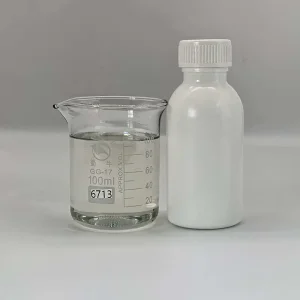
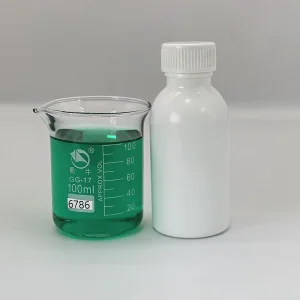
The reconstruction and optimization of Iraq’s downstream and upstream industrial infrastructure require coating solutions of exceptional resilience. Major industrial sectors in Basra, Baghdad, Erbil, and Kirkuk operate under demanding ambient environments characterized by thermal fluctuations, high mineral concentrations in process water, and corrosive trace gases. Electroless Nickel Plating (ENP)—an autocatalytic chemical process that deposits a uniform, dense nickel-phosphorus alloy coating onto metallic substrates—has emerged as a foundational technology for protecting flow assurance components, gas separators, pipeline fittings, and marine terminal infrastructure.
Historically, electrolytic chrome and standard electroplated nickel coatings were used for wear and corrosion mitigation. However, these traditional processes fail to provide uniform thickness in complex, recess-heavy configurations, leading to premature substrate exposure. Iraq’s oilfield processing machinery, extraction systems, and water treatment systems rely heavily on components with intricate configurations. Electroless nickel chemistry, independent of electric current distribution, ensures a perfectly uniform barrier film across all complex surfaces, inner pipe bores, and threads.
In Iraq’s massive southern oilfields, downhole tools and pipeline manifolds endure wet $H_2S$ (sour gas) and high-pressure $CO_2$ conditions. The reaction of these gases with water forms highly corrosive acids that rapidly degrade standard carbon steel. Our high-phosphorus formulations, containing 10% to 13% phosphorus by weight, exhibit an amorphous solid-state structure that lacks grain boundaries. This prevents the chemical attack pathway, ensuring the longevity of critical valve gates, seats, and drill string assemblies.
On a global scale, the industrial surface engineering market is rapidly shifting toward eco-compliant, high-performance chemistry. Regulatory frameworks like Europe’s REACH and international RoHS directives have driven the phase-out of traditional hexavalent chromium and heavy metal-stabilized electroless nickel formulas. Our advanced formulations, specifically engineered for the Iraqi market, are fully lead-free and cadmium-free, utilizing clean, food-grade chelating systems and highly stable organic stabilizers that conform to global sustainability codes without sacrificing plating bath life or deposition rate.
From a regional perspective, the Middle East is modernizing its manufacturing standards. Iraq's strategic proximity to Persian Gulf maritime routes highlights the need for marine-grade corrosion mitigation. Autocatalytic nickel-phosphorus coatings are highly effective in resisting marine atmospheric salinity, brackish coastal environments, and severe abrasive wear from wind-blown desert sand particles. Transitioning from basic electroplating to state-of-the-art electroless plating allows Iraqi operators to minimize downtime, extend maintenance cycles, and protect billions of dollars in critical infrastructure.
Understanding the fundamental chemistry of electroless nickel deposition is essential for selecting the correct formulation for industrial applications. The deposition process is driven by the controlled reduction of nickel ions ($Ni^{2+}$) on a catalytic substrate using a reducing agent, typically sodium hypophosphite ($NaH_2PO_2 \cdot H_2O$). Unlike electroplating, which uses an external electrical current to reduce metal cations, electroless plating relies on a series of chemical reactions governed by localized catalytic sites on the metal surface.
The primary reaction mechanism can be represented by the following simplified chemical equation:
Simultaneously, a side reaction reduces phosphorus from the hypophosphite agent, incorporating it into the deposit matrix to form a nickel-phosphorus alloy ($Ni-P$). The concentration of phosphorus in the deposit dictates the physical, mechanical, and corrosion-resistant properties of the coating:
Eliminating lead (Pb) and cadmium (Cd) stabilizers from our chemical systems to ensure compliance with international environmental standards while maintaining bath stability and plating speed.
Incorporating silicon carbide (SiC), polytetrafluoroethylene (PTFE), or carbon nanotubes into the electroless nickel matrix to achieve ultra-low friction coefficients and superior wear resistance for turbine blades and compressors.
Developing specialized low-temperature plating baths (operating at 65°C - 75°C) to enable high-quality plating on heat-sensitive aluminum alloys and non-metallic composites used in aerospace and telecom components.
SUZHOU HIYIE CHEMICAL Co., LTD has a diverse product portfolio that covers consumer electronics, communication equipment, the semiconductor industry, automotive hardware, craft gifts, and industrial surface finishing formulations. To address complex technical challenges within the industry, we have collaborated with multiple domestic and foreign chemical companies and universities to establish a mobile R&D center network.
Since our establishment, we have set up dedicated R&D laboratories in Wuhan and Shanghai. Our extensive marketing and support network covers major manufacturing regions, including the Pearl River Delta, Yangtze River Delta, and the Bohai Rim. Our products are widely used and recognized by leading multinational corporations such as Foxconn Technology Group, Qinghai Salt Lake Group, Chint Group, Hongbao Group, Stanley Group, and Shifeng Group, establishing our reputation as a trusted supplier of high-performance surface finishing systems.

Our team includes dedicated technical sales specialists and surface finishing chemists who provide onsite bath startup assistance and process parameter audits.
Our adaptable R&D structure allows us to customize bath chemistry, deposit speeds, and phosphorus content to meet specific customer requirements.
We leverage advanced, environmentally friendly chemical formulations to deliver lead-free, cadmium-free, and high-stability systems.
We provide comprehensive pre-sale planning, process engineering consultations, and fast technical support to minimize downtime.
To demonstrate the field-proven capabilities of our chemical systems, we have compiled case studies detailing how our surface treatments protect equipment operating in severe conditions across key Iraqi industrial hubs.
Substrate: AISI 4140 High-Tensile Steel | Formulation: HITEC EN 6786 A/B/C High Phosphorus Electroless Nickel.
An exploration company operating in the Rumaila oilfield faced severe pitting corrosion on valve manifolds and drill stabilizers from high $H_2S$ and chloride levels. Applying a 50-micron coating of HITEC EN 6786 provided a dense, amorphous barrier. Standard ASTM B117 salt spray testing demonstrated corrosion resistance exceeding 1,000 hours, extending maintenance intervals by 300%.
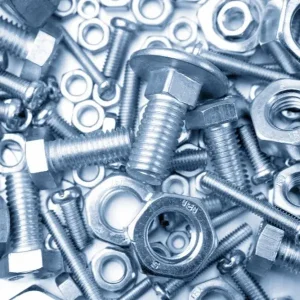
Substrate: Heavy Carbon Steel Fasteners & Brackets | Formulation: ZN-318 Blue Trivalent Zinc-Nickel Passivation.
Municipal reconstruction projects in Northern Iraq required high-tensile structural fasteners that could withstand weathering, seasonal rain cycles, and installation abrasions. The ZN-318 Zinc-Nickel alloy system was selected to replace hot-dip galvanizing. It provided uniform thread coverage without compromising dimensional tolerances and offered galvanic corrosion protection.
Substrate: Oxygen-Free Electrolytic Copper | Formulation: 31685 Rapid Brightening Nickel Plating.
Substation expansions around Baghdad required low contact-resistance connectors protected against oxidation under high thermal loads. The 31685 system delivered a bright, uniform nickel deposit that served as a barrier layer. It maintained chemical stability and low contact resistance, reducing maintenance shutdowns.
Answers to common technical inquiries regarding chemical mechanisms, bath parameters, and application practices in Iraq's industrial sector.
The lifetime of an electroless nickel plating bath is measured in Metal Turnovers (MTO), which represents the replenishment and deposition of the initial nickel content. It is primarily limited by the accumulation of sodium orthophosphite ($NaH_2PO_3$), a byproduct of the reduction process. As the orthophosphite concentration rises, it can lead to bath instability and rough deposits. Bath life can be maximized through precise temperature control (avoiding localized overheating), maintaining pH within the specification range, using automated chemical feed systems, and utilizing premium raw materials with stable organic stabilizer systems like those in our HITEC series.
The phosphorus content determines the deposit's crystalline phase. Low-phosphorus deposits (1-4% P) are crystalline and possess high hardness and wear resistance but lower corrosion resistance in acidic media. Medium-phosphorus deposits (6-9% P) have a mixed crystalline-amorphous structure suitable for general industrial applications. High-phosphorus deposits (>10% P) have an amorphous, glass-like structure with no grain boundaries. This lack of grain boundaries prevents corrosive chemical pathways, making high-phosphorus coatings highly resistant to acidic environments, such as those containing wet $H_2S$ and $CO_2$.
Yes. Non-catalytic metals like copper, brass, and bronze do not naturally initiate the autocatalytic deposition process. To plate these substrates, they must first be initiated. This can be achieved by contacting the copper part with a catalytic metal (such as steel or aluminum) while submerged in the bath, applying a brief electrical current (galvanic initiation), or using a chemical activator like a dilute palladium chloride solution to deposit a catalytic layer on the surface.
Post-plate heat treatment (typically at 400°C for 1 hour) induces recrystallization and the precipitation of nickel phosphide ($Ni_3P$) within the alloy matrix. This process significantly increases the microhardness of the coating, raising it from an as-deposited value of 500-600 HV to over 1000 HV, which is comparable to hard chromium. However, this heat treatment can reduce the coating's corrosion resistance in certain acidic environments because the formation of $Ni_3P$ particles creates grain boundaries and galvanic micro-cells within the layer.
The pH of the bath dictates the deposition rate and the phosphorus content of the alloy. A lower pH reduces the deposition rate but increases the phosphorus content, while a higher pH increases the deposition rate but decreases the phosphorus content. Furthermore, operating the bath at a pH above the recommended range can lead to spontaneous decomposition (triggering rapid plate-out on bath walls), whereas operating at a low pH can halt the deposition process. The chemical reduction of nickel continuously releases hydrogen ions ($H^+$), which lowers the pH; therefore, frequent or automated additions of ammonium hydroxide or carbonate buffers are necessary to maintain stability.
Explore our complete selection of plating chemicals, passivations, and catalysts designed for modern industrial manufacturing, automotive assembly, and protective coatings.
Speak directly with our technical support team to select the appropriate electroless nickel chemistry, arrange sample testing, or optimize your plating line parameters.
Send Inquiry Now HIYIE
HIYIE