Selected high-efficiency surface treatments optimized for the automotive and precision hardware sectors of Nagoya
Analyzing the Technical Migration toward Sacrificial Coating Systems in the Heart of Japan's Automotive Monozukuri
In Nagoya and the surrounding Aichi prefecture—recognized globally as the absolute powerhouse of Japan's automotive manufacturing (Monozukuri)—the engineering demand for advanced surface protection has evolved rapidly. Traditional electroplating technologies, such as pure zinc, are no longer sufficient to meet the extended warranties and harsh environmental conditions demanded by global automotive OEMs. Consequently, alkaline zinc-nickel alloy electroplating (consisting of 12-15% nickel content) has become the industry standard for securing high-level sacrificial corrosion protection.
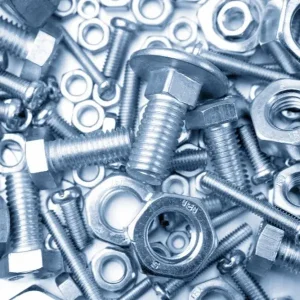
Our company specializes in delivering chemical solutions that maintain a precise γ-phase (gamma-phase) crystalline structure within the deposited alloy. By utilizing specialized organic additives and bath stabilizers, our 6185 Alkaline Zinc-Nickel Plating bath produces deposits that act as an exceptionally uniform barrier against atmospheric oxidization. This plating technology prevents the galvanic corrosion typically observed when steel fasteners or brackets contact lightweight aluminum structural members—a critical consideration for EV automotive designers in the Chubu region.
Information Gain Insight: The mechanical performance of a zinc-nickel coating is highly dependent on the stability of the nickel percentage. If the nickel content drops below 12%, the coating loses its thermal stability and exhibits lower corrosion resistance. If it exceeds 16%, the deposit becomes highly stressed and prone to microcracking during post-plating bending. Our formulation restricts this variance within a narrow ±0.5% tolerance window under industrial high-speed production conditions.
Global procurement teams targeting the Japanese market must navigate a highly complex web of technical specifications and environmental mandates. In Nagoya, key Tier-1 auto parts manufacturers mandate adherence to strict OEM standards, including Toyota's TSH6524G, Honda's HES D2001, and Nissan's NES M0140, alongside global standards like ASTM B841 and ISO 4042. Our chemical products are engineered to exceed these specifications, offering over 1,000 hours of Neutral Salt Spray (NSS) resistance without the formation of red rust, even after thermal shock exposure at 120°C to 180°C.
While the automotive sector represents the primary consumer of zinc-nickel electroplating in the Nagoya area, other key sectors are rapidly adopting these formulations. The semiconductor tooling industry and the communications hardware manufacturing sectors require plating with high thickness uniformity and minimal hydrogen embrittlement. Precision components used in cleanroom robots, server rack structural assemblies, and high-frequency communication base stations rely heavily on our electroless nickel and trivalent passivation chemistries to ensure long-term electrical conductivity, wear resistance, and oxidation protection.
Navigating the transition to sustainable, high-durability electroplating systems
Environmental regulations worldwide, including the European Union's REACH directive and Japan's Chemical Substances Control Law (CSCL), have pushed chemical researchers to find alternatives to legacy hazardous components. A key achievement of our mobile R&D centers in Wuhan and Shanghai is the commercialization of the 8315 Alkaline Cyanide-free Bright Zinc Plating process. This chemistry delivers bright, uniform deposits across a wide range of current densities without the safety and wastewater treatment costs associated with cyanide-based electrolytes.
Furthermore, post-plating passivation must now be completely free of hexavalent chromium ($Cr^{VI}$). Our 216 High Corrosion-resistant Iridescent Trivalent Zinc Passivation utilizes stabilized trivalent chromium ($Cr^{III}$) complexed with nano-sized silica sealers. This combination provides a self-healing film that blocks moisture penetration at microscopic fracture points, establishing a robust defense line that matches or exceeds legacy hexavalent coatings.
For high-tensile fasteners (Class 10.9, 12.9, and higher) commonly used in Nagoya's heavy machinery and automotive engines, hydrogen embrittlement is a critical risk factor. During the electrodeposition process, atomic hydrogen can penetrate the steel lattice, leading to sudden catastrophic failures under load. Our alkaline zinc-nickel system is designed with a high current efficiency that minimizes hydrogen co-deposition. When paired with standard post-plating baking procedures, it ensures the complete integrity of critical structural fasteners.
A Professional Manufacturer of Specialty Organic Electroplating Chemicals
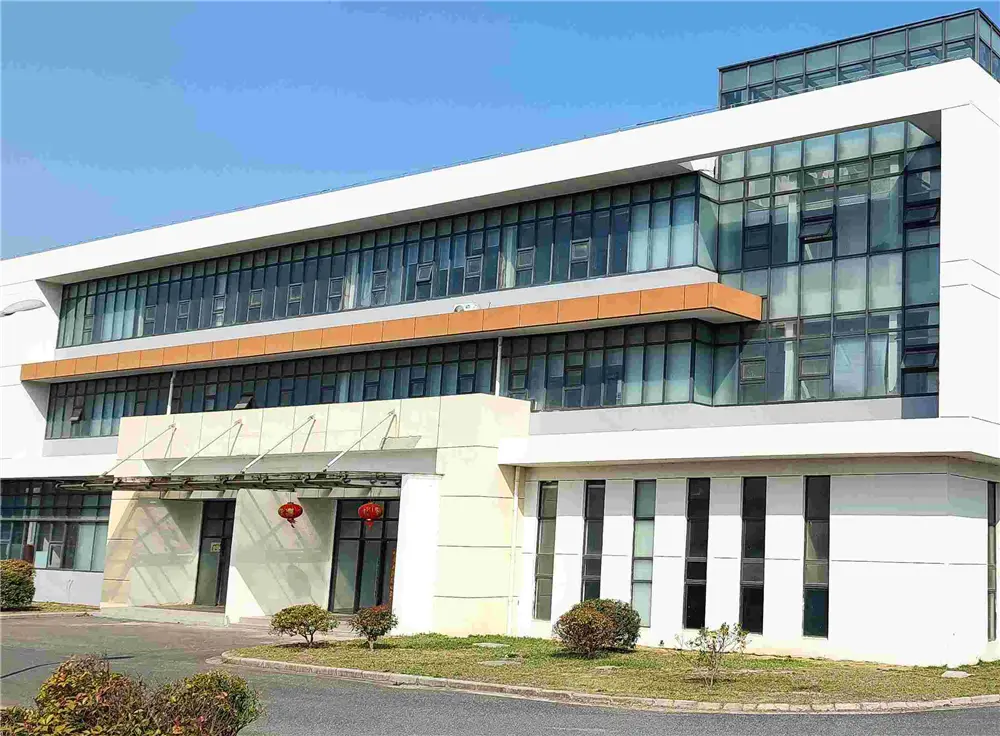
SUZHOU HIYIE CHEMICAL Co., Ltd. supplies advanced surface finishing chemicals across multiple demanding sectors, including consumer electronics, communication equipment, the semiconductor industry, automotive hardware, and high-precision craft manufacturing. By collaborating with domestic and foreign chemical companies and top academic universities, we have established a highly mobile R&D center dedicated to overcoming the technical bottlenecks of modern surface chemistry.
Since our founding, we have set up dedicated R&D hubs in Wuhan and Shanghai, expanding our marketing and technical service network to key manufacturing clusters, including the Pearl River Delta, Yangtze River Delta, and the Bohai Rim. Today, our advanced chemical products are widely adopted and qualified by leading global companies, including Foxconn Technology Group, Qinghai Salt Lake Group, Chint Group, Hongbao Group, Stanley Group, and Shifeng Group, securing our position as a trusted and reliable supplier in the international electroplating market.
Our commitment to technical excellence, global logistics, and local engineering support
We field a highly trained engineering and sales support team, dedicated to assisting you from initial bath design and pilot runs to full-scale automated line configuration.
Our adaptable R&D architecture allows us to custom-formulate organic additives and carriers to meet specific target tolerances and local environmental parameters.
We prioritize sustainable chemistry, providing zero-cyanide, low-phosphorus, and trivalent chromium options that reduce your environmental compliance footprint.
Our dedicated pre-sale consultation and after-sales service teams offer rapid response to support you during routine bath analysis and troubleshooting.
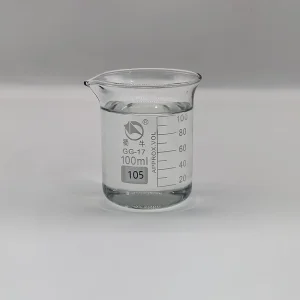
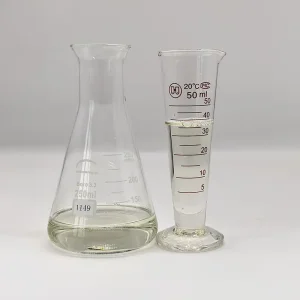
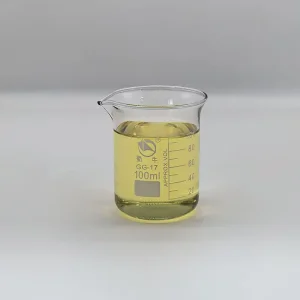
Our comprehensive selection of brighteners, carriers, and electroless plating processes for industrial manufacturers
Expert answers to critical engineering and procurement questions commonly raised in the Japanese market
The range of 12-15% nickel content corresponds to the formation of a single-phase gamma (γ) zinc-nickel alloy crystal structure ($Ni_5Zn_{21}$). This phase provides the optimal balance of electrochemical sacrificial protection and low self-corrosion. If the nickel concentration falls below 12%, the deposit will yield a mixed eta and gamma phase, leading to a substantial decrease in corrosion resistance. Conversely, if it exceeds 16%, the deposit shifts to a brittle phase that is prone to microcracking under thermal stress or subsequent mechanical deformation.
Alkaline systems, such as our 6185 Alkaline Zinc-Nickel Plating, offer exceptional throwing power, resulting in a highly uniform coating thickness across complex geometry components (such as threaded fasteners, deep cavities, and brake calipers). The variation in nickel co-deposition is minimal across different current density areas. In contrast, acid zinc-nickel systems provide faster deposition speeds and are suitable for simple geometries (such as steel strip or pipe lines), but struggle to achieve uniform alloy composition on complex-shaped parts.
All of our post-treatment solutions, including the 216 High Corrosion-resistant Trivalent Zinc Passivation and ZN-318 Blue Trivalent Passivation, are formulated strictly without the addition of hexavalent chromium ($Cr^{VI}$), cadmium, lead, or mercury. Our products comply with the European End-of-Life Vehicles (ELV) Directive and the RoHS Directive, allowing global automotive components plated with our chemicals to move seamlessly through international customs.
Our organic brighteners and carrier complexes are designed to resist anodic decomposition. Under high-throughput operating conditions, standard additives can oxidize at the anodes, leading to buildup of organic breakdown products that degrade plating quality. Our proprietary carriers remain stable, extending bath life, reducing carbon treatment frequency, and ensuring consistent gloss and alloy percentages over long processing intervals.
 HIYIE
HIYIE